

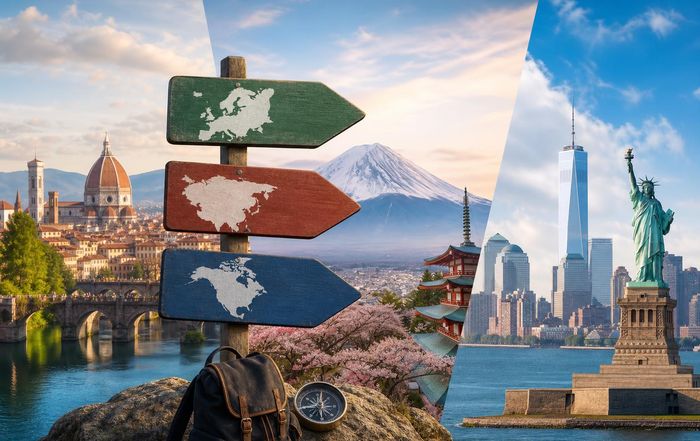
How to Choose Between Europe, Asia and North America
Travelers planning their next major journey increasingly find themselves choosing among three vast and endlessly varied regions: Europe, Asia and North America. Each offers distinctive cultures, landscapes and travel styles, and each is evolving rapidly as tourism, technology and sustainability reshape how people move around the globe. For readers of WorldWeTravel, the decision is rarely about which continent is "best," but rather which one aligns most closely with their interests, values, budget and the kind of memories they hope to create.
This article explores how to make that choice thoughtfully, drawing on current travel trends, expert guidance and reliable data from leading organizations. It considers destinations, travel logistics, family needs, hotels and accommodation, cultural immersion, eco-conscious options, health and wellness, business and remote work, and broader global developments. Throughout, it aims to help happy travelers match their personal priorities with the strengths of each region, while highlighting how we can support planning at every stage.
Understanding the Character of Each Region
Although Europe, Asia and North America are each extraordinarily diverse, certain broad characteristics can help frame an initial comparison, especially for travelers considering where to go next after browsing the global overview on WorldWeTravel's destinations hub.
Europe is often associated with compact geography, dense cultural heritage, efficient cross-border transport and a high concentration of historic cities and towns. From the museums of Paris and London to the medieval centers of Florence, Prague and Bruges, travelers can experience multiple countries and languages within a single trip. The European Union's Schengen Area allows many visitors to move relatively freely among participating nations, which makes multi-country itineraries more practical. According to data from the UN World Tourism Organization (UNWTO), Europe consistently receives more international tourist arrivals than any other region, reflecting both its accessibility and its long-standing infrastructure for visitors.
Asia, by contrast, is defined by its scale and diversity. It stretches from the megacities of Japan and South Korea to the tropical beaches of Thailand and Malaysia, the cultural centers of India, the financial hubs of Singapore and Hong Kong, and the rapidly changing landscapes of China and Southeast Asia. The region's economic growth and expanding middle class have fueled major investments in airports, high-speed rail and hospitality. Reports from the Asian Development Bank (ADB) and World Travel & Tourism Council (WTTC) highlight Asia's central role in the future of global tourism, with domestic and intra-Asian travel rising alongside international arrivals.
North America, encompassing the United States, Canada and Mexico in most travel discussions, offers vast natural spaces, iconic road trips and some of the world's most recognizable cityscapes. From the national parks of the American West and the Rockies of Canada to the cultural vibrancy of New York, Los Angeles, Toronto and Mexico City, the region combines modern infrastructure with dramatic landscapes. According to Destination Canada (destinationcanada.com) and the U.S. National Travel and Tourism Office (travel.trade.gov), visitor numbers have been rebounding strongly, supported by renewed interest in outdoor travel and long-haul trips.
For travelers comparing these three regions, the key is to move beyond stereotypes and consider how each aligns with specific priorities: cultural depth, family-friendliness, sustainability, wellness, business opportunities and budget constraints, all of which are explored in greater detail on WorldWeTravel's travel insights.
Destinations and Itinerary Style
The style of itinerary a traveler prefers often provides the clearest initial guidance when choosing among Europe, Asia and North America. Those who enjoy moving frequently between cities, sampling different cuisines and languages in a single trip, and relying heavily on public transport often find Europe particularly well suited. High-speed trains such as France's TGV, Germany's ICE and Spain's AVE, along with extensive regional networks, allow for relatively low-stress travel between major hubs, as detailed by Eurail (eurail.com) and national rail operators. Multi-country passes and integrated ticketing simplify logistics, which is valuable for travelers who prefer not to rent a car.
Asia, by contrast, often invites a more varied rhythm, alternating between megacities and quieter retreats. In Japan, the Shinkansen bullet train network, described by Japan Railways Group (japanrailpass.net), enables fast movement between cities such as Tokyo, Kyoto and Osaka, while in Thailand and Vietnam, many visitors combine time in bustling capitals with island or countryside stays. Low-cost airlines in Southeast Asia, tracked by aviation analysts at CAPA - Centre for Aviation (centreforaviation.com), have made regional hopping more accessible, though travelers must remain attentive to varying safety and service standards. In South Asia, distances and infrastructure can require more time and flexibility, rewarding those who prefer deeper immersion in fewer locations.
North American itineraries are often defined by distance and the appeal of the open road. The classic cross-country drive in the United States, a journey along Route 66 or the Pacific Coast Highway, or a loop through the Canadian Rockies all rely heavily on cars or campervans. While major cities have well-developed airports and some intercity rail, particularly in the U.S. Northeast Corridor and parts of Canada, the continent's sheer size means travelers often choose one or two regions per trip. Resources from Amtrak (amtrak.com) and VIA Rail Canada (viarail.ca) outline rail possibilities, but car rentals remain central for many itineraries, especially in national parks and rural areas.
So travelers can explore sample journeys across all three continents, comparing how many locations can reasonably be included in a two-week trip and how transport modes shape the overall experience.
Traveling with Family: Comfort, Safety and Enrichment
Family travelers often weigh safety, healthcare access, ease of navigation and kid-friendly activities more heavily than solo adventurers or couples. Here, all three regions offer compelling strengths, though the balance differs by destination.
In Europe, families benefit from relatively short distances, well-marked infrastructure and a wide choice of accommodations that can host multi-generational groups. Cities such as Copenhagen, Amsterdam, Munich and Edinburgh are frequently cited by sources like Lonely Planet (lonelyplanet.com) and National Geographic Travel (nationalgeographic.com/travel) as particularly family-friendly, thanks to parks, museums with interactive exhibits and cycling paths. Access to high-quality healthcare is generally strong, and public transport is usually stroller-friendly, although very historic centers can involve cobblestones and stairs. Families can find more detailed planning guidance on WorldWeTravel's family travel section, which highlights itineraries designed with children in mind.
Asia offers a different kind of family adventure, often combining education and excitement. Theme parks such as Tokyo Disney Resort, Hong Kong Disneyland and Universal Studios Japan attract global visitors, while cultural experiences like temple visits in Kyoto, night markets in Taiwan and wildlife encounters in Malaysia provide rich learning opportunities. Safety levels vary by country, but many East and Southeast Asian cities rank highly in international safety indexes published by organizations such as The Economist Intelligence Unit (eiu.com) and Numbeo (numbeo.com), though travelers should always consult the latest government advisories. Climate and air quality can be important considerations, particularly in highly urbanized areas and during specific seasons, reinforcing the value of careful timing and route planning.
In North America, family travel often revolves around national parks, road trips and major attractions such as Walt Disney World in Florida, Disneyland Resort in California, and cultural institutions like the Smithsonian museums in Washington, D.C. The infrastructure is generally well adapted to families, with widespread availability of family rooms, car seats and child-friendly dining. Safety standards in accommodations and attractions are closely regulated, though families should remain attentive to regional differences and follow guidance from agencies such as the U.S. Centers for Disease Control and Prevention (cdc.gov/travel) for health-related travel advice. For those balancing multiple generations, WorldWeTravel's family resources provide comparative insights into how each region caters to younger and older travelers.
Accommodation and Hotel Experiences
Choosing between continents often comes down to the type of accommodation experience a traveler prefers, whether that is historic charm, modern convenience, nature-focused stays or luxury wellness retreats. The hospitality landscape in all three regions has continued to evolve, with sustainability, technology and local authenticity becoming increasingly central themes.
Europe is renowned for its variety of hotels, from centuries-old properties in city centers to alpine lodges and seaside resorts. Many travelers seek out boutique hotels housed in historic buildings, where local architecture and design are integral to the experience. At the same time, international chains maintain a strong presence, offering loyalty programs and standardized amenities. The European Travel Commission (etc-corporate.org) has noted a growing emphasis on sustainable operations and heritage preservation, with more properties pursuing certifications such as Green Key (greenkey.global). Travelers can explore curated options and compare styles across countries through WorldWeTravel's hotels guide.
In Asia, the hotel scene is marked by rapid innovation and striking contrasts. Urban centers like Singapore, Shanghai, Bangkok and Seoul host cutting-edge skyscraper hotels, while rural and coastal areas offer eco-lodges, traditional ryokan in Japan and wellness resorts in Thailand and Bali. According to industry reports from STR (str.com) and JLL Hotels & Hospitality (jll.com), Asia has seen significant growth in both luxury and mid-scale segments, with many properties integrating local materials and cultural elements. This diversity allows travelers to combine high-tech city stays with more contemplative retreats in a single journey.
North America's accommodation options are equally broad, from national park lodges and wilderness cabins to urban design hotels and large convention properties. The U.S. National Park Service (nps.gov) and Parks Canada (pc.gc.ca) highlight a range of in-park and nearby lodging choices, though availability can be highly seasonal and reservations often need to be made well in advance. Major cities feature an extensive range of international brands, boutique hotels and apartment-style stays, which is particularly attractive for extended trips or family groups. Travelers comparing hotel styles across continents can consult WorldWeTravel's accommodation insights to identify the mix that best suits their travel goals.
Culture, Food and Deeper Immersion
For many travelers reading WorldWeTravel, the choice between Europe, Asia and North America is ultimately driven by the desire for cultural immersion, whether that means art and history, contemporary music and design, or culinary exploration. Each region offers distinctive pathways to these experiences, and understanding their character can help narrow the decision.
Europe's cultural density is unmatched in some respects, with a concentration of museums, galleries and historic sites that allow travelers to trace centuries of art, architecture and political history in a relatively compact area. Institutions such as the Louvre in Paris, the British Museum in London, the Uffizi Gallery in Florence and the Prado Museum in Madrid hold collections that attract visitors from around the world, and many cities host annual festivals, from the Edinburgh Festival Fringe to the Venice Biennale. Food culture is equally rich, with regional cuisines in Italy, France, Spain and beyond increasingly protected and promoted through initiatives documented by organizations like Slow Food (slowfood.com). Travelers seeking to connect these experiences across countries can explore cultural itineraries on WorldWeTravel's culture portal.
Asia offers cultural diversity on a scale that can be both exhilarating and humbling. Ancient temples in Angkor, Bagan and Kyoto, contemporary art scenes in Seoul and Shanghai, and long-running traditions in India, China and Southeast Asia create a layered experience where past and present coexist. Culinary exploration is a major draw, from street food in Bangkok and Hanoi to fine dining in Tokyo, Hong Kong and Singapore, with several Asian cities regularly appearing in global restaurant rankings compiled by sources such as The World's 50 Best Restaurants (theworlds50best.com). Travelers interested in learning to cook regional dishes, participate in tea ceremonies or join local festivals often find Asia particularly rewarding, though language differences can require more preparation and flexibility.
North America's cultural appeal lies partly in its role as a global center of contemporary music, film, technology and design, and partly in its rich indigenous and immigrant histories. Cities like New York, Los Angeles, Toronto, Montreal, Mexico City and Chicago host world-class museums, theaters and music venues, while festivals such as South by Southwest in Austin and the Toronto International Film Festival attract global creative communities. Food culture is similarly diverse, shaped by waves of immigration and local ingredients, with strong traditions in regions such as the U.S. South, the Pacific Northwest, Quebec and Mexico's many culinary heartlands. More in-depth cultural travel ideas can be found through WorldWeTravel's culture-focused articles, which highlight experiences across all three regions.
Eco-Conscious Travel and Nature Experiences
As travelers become more aware of their environmental impact, the choice between continents often includes questions about sustainability, conservation and opportunities to connect with nature responsibly. Organizations such as the United Nations Environment Programme (unep.org) and Global Sustainable Tourism Council (gstcouncil.org) emphasize that no region is inherently "greener" than another; the key lies in specific destinations, operators and traveler behavior.
Europe has made visible strides in promoting low-carbon travel within the continent, particularly through rail networks and cycling infrastructure. Night trains are being revived on several routes, and cities such as Amsterdam, Copenhagen and Vienna are frequently cited for their sustainable urban mobility initiatives. Protected areas, from the national parks of Scandinavia to the coastal reserves of Portugal and Greece, provide opportunities for hiking, wildlife viewing and marine activities with relatively strict environmental regulations. Travelers can explore eco-focused European ideas via WorldWeTravel's sustainability and eco-travel section, which emphasizes responsible operators and lesser-known nature destinations.
Asia's natural diversity is extraordinary, encompassing tropical rainforests, high-altitude mountains, coral reefs and extensive coastlines. Countries such as Costa Rica are often highlighted globally for eco-tourism, but within Asia, destinations like Bhutan, parts of Malaysia, Indonesia's lesser-developed islands and protected areas in Thailand and Vietnam are increasingly recognized for conservation-focused tourism. However, environmental pressures, including overtourism at certain sites and climate-related risks, require travelers to choose providers carefully and follow local guidelines. Conservation organizations and initiatives, documented by groups like WWF (wwf.panda.org) and regional NGOs, offer valuable context when selecting national parks and marine activities.
North America is home to some of the world's most iconic protected landscapes, including Yellowstone, Yosemite, Banff, Jasper and many others. These parks are managed with a strong emphasis on conservation and visitor education, though growing popularity has led to reservation systems and capacity limits in certain areas. The National Park Service and Parks Canada provide detailed information on low-impact visitation, trail conditions and wildlife safety. Eco-conscious travelers can also explore indigenous-led tourism initiatives, which are increasingly acknowledged as vital for both cultural and environmental stewardship. For inspiration on nature-focused itineraries that balance adventure with responsibility, readers can consult WorldWeTravel's eco travel resources.
Health, Wellness and Retreat Travel
Health and wellness have become central motivations for travel, particularly in the years following the global pandemic, and this shift is evident in developments across Europe, Asia and North America. Travelers choosing between continents often consider access to healthcare, wellness traditions, retreat offerings and the general pace of life in their target destinations.
Europe has a long history of spa culture, with thermal towns in Germany, Austria, Hungary, Switzerland and Italy offering restorative experiences that blend medical oversight and relaxation. Many of these destinations are recognized by organizations such as the European Spas Association (espa-ehv.eu) and have been modernized to meet contemporary wellness expectations. Mediterranean destinations in Spain, France, Italy and Greece also attract visitors seeking a combination of climate, cuisine and active outdoor lifestyles, which are often associated with longer-term health benefits. For those exploring wellness-oriented journeys, WorldWeTravel's health and retreat sections and retreat ideas provide comparative insights.
Asia is widely regarded as a global hub for holistic wellness, drawing on traditions such as Ayurveda, yoga, meditation, traditional Chinese medicine and various regional spa practices. Retreat centers in India, Sri Lanka, Thailand, Indonesia and Japan offer structured programs that combine physical, mental and spiritual elements, often in settings close to nature. Industry research from the Global Wellness Institute (globalwellnessinstitute.org) notes that Asia's wellness tourism sector has grown significantly, with travelers seeking longer stays and deeper engagement with local practices. As always, it is important to differentiate between medically supervised programs and more general wellness offerings, and to verify credentials carefully.
North America's wellness travel scene has expanded rapidly as well, with retreat centers in California, the Rocky Mountains, the U.S. Southwest, British Columbia and Quebec offering everything from yoga and mindfulness to outdoor adventure and digital detox programs. Integrative health centers and wellness-focused resorts often combine Western medical approaches with complementary practices, and many emphasize nature immersion as a key component of well-being. Reliable health and travel advice from sources such as the World Health Organization (who.int) and national public health agencies remains essential when planning any health-focused trip. Readers can explore region-by-region wellness ideas through WorldWeTravel's health and retreat content, which highlights both established and emerging destinations.
Business, Remote Work and Bleisure Travel
For many travelers, especially professionals in sectors like technology, finance and creative industries, the choice between Europe, Asia and North America is influenced by business commitments, remote work opportunities and the appeal of combining work and leisure. The concept of "bleisure" travel, where business trips are extended for personal exploration, has become increasingly common, and each region offers distinct advantages.
Europe's relatively compact geography, strong digital infrastructure and concentration of major business hubs-such as London, Paris, Frankfurt, Amsterdam and Zurich-make it particularly conducive to multi-city business itineraries. The European Commission and national investment agencies highlight ongoing investments in digital connectivity and innovation clusters, which attract remote workers and entrepreneurs. Several countries have introduced or expanded digital nomad or remote work visa schemes, though requirements vary and should be checked carefully on official government sites. For professionals planning to combine meetings with cultural or leisure activities, WorldWeTravel's business travel guide and work-focused content provide practical frameworks.
Asia is a critical region for global business, with major financial centers in Singapore, Hong Kong, Tokyo and Seoul, as well as rapidly expanding tech and manufacturing hubs in China, India, Vietnam and beyond. The region's time zones can be advantageous or challenging depending on a traveler's home base, but the growth of co-working spaces, as documented by organizations like JLL and CBRE (cbre.com), has made it easier to maintain productivity while on the move. Some countries, including Thailand and Indonesia, have explored or implemented visa options aimed at long-stay professionals, though regulations can change and should be verified directly with official immigration authorities.
North America remains central to global business and innovation, with Silicon Valley, New York, Toronto, Austin, Vancouver and many other cities serving as key hubs. High-speed internet, widespread co-working spaces and a strong culture of remote and hybrid work have made extended stays more feasible, particularly for those in technology and creative fields. However, visa and tax considerations can be complex for non-residents, underscoring the importance of professional advice. Travelers combining work and exploration can find region-specific strategies on WorldWeTravel's business and work pages, which address topics such as time zone management, productivity on the road and balancing meetings with meaningful local experiences.
Practical Tips for Making the Final Choice
Once travelers have considered their priorities across culture, nature, family needs, wellness and work, the final decision between Europe, Asia and North America often comes down to practical factors: budget, seasonality, visa requirements, language comfort and personal energy for long-haul flights.
Budget considerations vary widely within each region, with major cities in all three continents ranking among the world's most expensive according to cost-of-living indexes from Mercer (mercer.com) and The Economist Intelligence Unit, while smaller cities and rural areas can be significantly more affordable. In general, many parts of Southeast Asia and some Central and Eastern European destinations can offer strong value for money, while certain North American and Western European cities may require higher daily budgets. Seasonality also affects costs, with shoulder seasons often providing a balance between favorable weather and lower prices; WorldWeTravel's tips section offers region-specific advice on timing.
Visa and entry requirements are another key consideration and can differ substantially depending on a traveler's nationality. Official government websites and resources from organizations such as the International Air Transport Association (iata.org) provide up-to-date information on visas, health documentation and customs regulations. Language comfort may influence the choice as well; while English is widely used in tourism and business across all three regions, travelers who speak French, Spanish, German or other European languages may feel particularly at ease in parts of Europe and North America, while those familiar with Asian languages may find deeper access in specific countries.
Ultimately, the decision is rarely permanent. Many travelers who begin with Europe later explore Asia and North America, and vice versa, building a lifetime of experiences across continents. By aligning the strengths of each region with current interests-whether that means a family-friendly cultural circuit, a wellness retreat, an eco-focused adventure or a work-and-travel experiment-visitors can make each journey both personally meaningful and globally responsible.
The most important step is not choosing the "perfect" continent once and for all, but rather understanding what matters most at this particular moment in life and selecting the region that best supports that vision. With thoughtful planning, reliable information from trusted sources and a commitment to respectful, sustainable travel, Europe, Asia and North America all offer extraordinary possibilities for discovery and connection in the years ahead.