

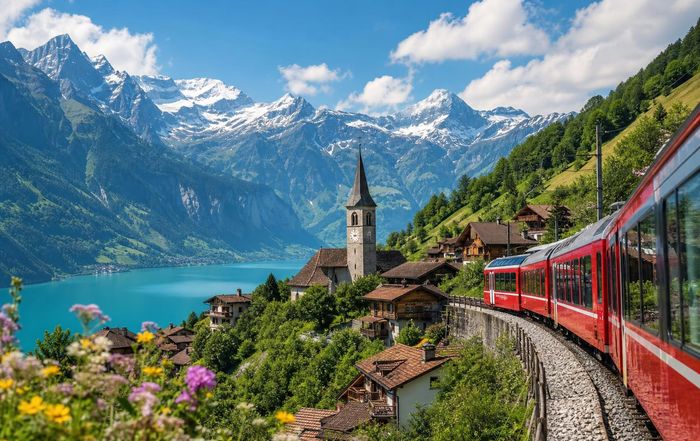
Switzerland Travel Guide to Alpine Villages and Scenic Trains
Switzerland has long held a special place in the imagination of travelers, with its crystalline lakes, jagged alpine peaks and villages that appear to have stepped out of a painting. For global travelled community of WorldWeTravel, the country offers an unusually rich combination of natural beauty, efficient infrastructure and deeply rooted cultural traditions, all of which make it one of the most rewarding destinations for those who wish to explore by rail and linger in mountain communities. As sustainable, slower forms of travel continue to gain prominence in 2026, Switzerland's commitment to public transport, environmental stewardship and high-quality hospitality places it at the forefront of responsible tourism.
This guide explores how travelers can weave together Switzerland's iconic scenic train journeys with stays in some of its most atmospheric alpine villages, highlighting practical insights, cultural context and wellness-oriented experiences that align closely with the values of WorldWeTravel and its global audience.
The Swiss Rail Experience: Backbone of Alpine Exploration
The Swiss rail network is widely regarded as one of the most efficient and punctual in the world, and it provides the backbone for nearly any journey through the mountains. According to Swiss Federal Railways (SBB), trains reach even remote valleys through a combination of mainline services, narrow-gauge mountain railways and integrated bus and boat connections, enabling travelers to plan complex itineraries without the need for a car. Those who wish to understand the system in detail can consult the official network maps and timetables directly with SBB, where real-time information and multilingual support make planning relatively straightforward.
For visitors, the Swiss Travel Pass, offered through Switzerland Tourism and SBB, is often the most convenient way to access this network. It provides unlimited travel on most trains, buses and boats, along with free or discounted entry to many museums and mountain excursions. While specific pricing and conditions should always be verified on the official sites, multiple independent travel resources, including Lonely Planet and Rick Steves Europe, consistently describe the pass as excellent value for travelers who plan to cover several regions in a short period.
For fans designing broader itineraries through Europe, WorldWeTravel's overview of key destinations can serve as a complementary resource, helping to connect Swiss rail journeys with nearby countries such as France, Italy, Germany and Austria, all of which are directly linked to Swiss cities by high-speed and regional trains.
Iconic Scenic Trains: From Glacier Express to Bernina Magic
Switzerland's scenic trains are more than just transportation; they are curated experiences that combine engineering prowess with panoramic views. The most famous of these routes, the Glacier Express, runs between Zermatt and St. Moritz (or Davos), crossing hundreds of bridges and numerous tunnels while traversing the high alpine landscapes of the Valais and Graubünden regions. With large panoramic windows and commentary in multiple languages, the Glacier Express has been celebrated by sources such as National Geographic and Condé Nast Traveler as one of the world's great train journeys. Travelers should, however, distinguish between the branded Glacier Express and the regular regional trains that run on similar tracks, since regional services can offer more flexibility for those who wish to hop off in smaller villages.
Equally renowned is the Bernina Express, which links Chur or St. Moritz with Tirano in northern Italy. The route crosses the UNESCO World Heritage-listed Rhaetian Railway in the Albula/Bernina Landscapes, recognized by UNESCO for its outstanding example of railway engineering harmoniously integrated into mountainous terrain. Independent reviews on platforms like The Man in Seat 61 and Eurail consistently highlight the dramatic transition from glaciers and high passes to palm-lined Italian valleys, making it one of the most diverse single-day rail experiences in Europe.
Other notable panoramic routes include the GoldenPass Express between Montreux and Interlaken, which connects the vineyards of Lake Geneva with the Bernese Oberland, and the Gotthard Panorama Express, combining a boat journey on Lake Lucerne with a train ride through the historic Gotthard route. These services, detailed on Swiss Travel System and Rail Europe, enable travelers to experience multiple Swiss landscapes within a compact timeframe, a feature particularly attractive for families and professionals who must balance limited vacation days with a desire for rich, varied experiences.
To align these journeys with personal interests, readers can consult **WorldWeTravel's dedicated rail and travel guides, which emphasize how to integrate scenic trains with cultural visits, family-friendly activities and wellness-focused retreats.
Alpine Villages: Charm, Culture and Community
Beyond the trains themselves, it is the villages at the heart of the Alps that give Swiss travel its enduring appeal. Many of these communities have preserved a strong sense of identity, with traditional wooden chalets, narrow lanes and local festivals that reflect centuries of alpine life. At the same time, they have embraced modern hospitality standards, enabling visitors to enjoy both authenticity and comfort.
One of the most iconic is Zermatt, set beneath the Matterhorn and accessible only by train, with combustion-engine vehicles banned in the village center. This car-free approach, documented by Zermatt Tourism and referenced in sustainability studies by organizations such as OECD Tourism, supports cleaner air and a quieter environment, and it offers a compelling example of how high-volume tourism can be managed responsibly. Zermatt combines luxury hotels with family-run guesthouses, fine dining with rustic mountain huts, and year-round outdoor activities with a strong emphasis on safety and environmental protection.
In the Bernese Oberland, villages such as Wengen, Mürren and Grindelwald provide classic alpine scenery with sweeping views of the Eiger, Mönch and Jungfrau. Wengen and Mürren are also car-free, accessed via cogwheel or cable railways, and have long been favored by families and hikers who prefer quieter settings. The Jungfrau Region is well documented by Jungfrau Railways and widely reviewed by independent travelers on sites like Tripadvisor, which consistently highlight the quality of marked hiking paths, winter sports infrastructure and well-integrated public transport.
Further east, the Engadine valley and the resort town of St. Moritz offer a different atmosphere, combining long hours of sunshine, distinctive Engadine architecture and a reputation for wellness dating back to the 19th century. Historical accounts collected by Engadin St. Moritz Tourism describe how mineral springs and mountain air attracted visitors for health reasons long before modern spa culture emerged. Today, the region blends that heritage with contemporary design hotels, cross-country skiing networks and access to the Bernina and Glacier Express routes.
Travelers who wish to explore these communities in depth can complement official tourism resources with **WorldWeTravel's profiles of alpine hotels and destinations, which emphasize experiential stays, local character and family suitability.
Family Travel in the Swiss Alps
Switzerland is particularly well suited to family travel, not only because of its safety and cleanliness, but also because of the way infrastructure and attractions are designed to be accessible to visitors of all ages. Many mountain railways, for example, offer family discounts, playgrounds near stations and easy walking paths with minimal elevation gain, making it possible for children and older relatives to share in panoramic views without strenuous hiking.
The Swiss Family Card, which allows children to travel free with a paying parent or guardian on many public transport services, is highlighted by Swiss Travel System as a central component of the country's family-friendly policy. Independent family travel blogs, including Family Travel Association partners and various European parenting publications, generally confirm that families find Swiss trains reliable, clean and easy to navigate with strollers and luggage, although travelers are advised to book panoramic trains early during peak seasons.
In alpine villages, family-focused attractions range from themed hiking trails with educational stations to summer toboggan runs and winter sledding hills. Resorts such as Flumserberg, Lenzerheide and Arosa have invested in year-round activities, documented by Switzerland Tourism, which encourage children to engage with nature while learning about alpine ecosystems and local traditions. For inspiration on structuring multi-generational itineraries that combine rail journeys, outdoor play and cultural visits, readers can draw on **WorldWeTravel's dedicated family travel content.
Culture, Language and Culinary Traditions in the Alps
Switzerland's cultural richness is often underappreciated by travelers who focus primarily on scenery. The country has four national languages-German, French, Italian and Romansh-and this linguistic diversity shapes the character of its alpine villages. In the Bernese Oberland and central Switzerland, Swiss-German dialects dominate; in the Valais and Graubünden, visitors encounter both German and French or Romansh; while the southern valleys open toward Italian-speaking communities. The Swiss Federal Statistical Office provides detailed data on linguistic distribution, and cultural organizations such as Pro Helvetia support initiatives that preserve regional traditions.
Culinary experiences offer an accessible window into this diversity. Classic dishes such as fondue and raclette, documented by Swiss Gastronomy and widely discussed in European food media, reflect pastoral traditions of cheese-making and communal dining. In mountain villages, travelers can sample local cheeses, cured meats and seasonal specialties, often in rustic settings that emphasize simplicity and quality. At the same time, many alpine hotels host refined restaurants that reinterpret regional ingredients in contemporary ways, and several have been recognized by guides like Gault&Millau and Michelin Guide.
Cultural events such as alpine cattle descents, yodeling festivals and local markets provide further opportunities for immersion. While dates and specific programs vary from year to year, official tourism boards and regional cultural calendars offer up-to-date information, and travelers are advised to verify details directly to ensure accuracy. For those who wish to deepen their understanding of local customs before arrival, **WorldWeTravel's curated culture section offers context and stories that illuminate traditions across Switzerland and beyond.
Eco-Conscious Travel and Sustainable Alpine Tourism
Sustainability has moved from a niche concern to a central pillar of Swiss tourism policy. The country's emphasis on public transport, protected landscapes and renewable energy aligns closely with the values of environmentally conscious travelers who seek to minimize their footprint while still enjoying meaningful experiences. Switzerland's "Swisstainable" program, presented by Switzerland Tourism, encourages businesses to adopt measurable sustainability criteria, ranging from energy efficiency and waste reduction to community engagement.
Independent assessments by organizations such as the World Economic Forum, which has repeatedly ranked Switzerland highly in its Travel & Tourism Development Index, and research from ETH Zurich on environmental policy, suggest that the country's efforts in sustainable mobility and land-use planning are substantial, even if challenges remain around managing visitor flows in peak seasons. Car-free villages like Zermatt and Wengen, extensive electric train networks and well-maintained hiking trails all contribute to a model of tourism that seeks to balance economic benefits with environmental protection.
Travelers who prioritize eco-friendly practices can choose accommodations with recognized certifications, rely on rail and cable transport instead of rental cars, and support local businesses that emphasize regional products and responsible resource use. For deeper guidance on how to incorporate these principles into trip planning, **WorldWeTravel's eco travel and tips resources offer practical strategies applicable not only in Switzerland but around the world.
Wellness, Health and Alpine Retreats
The connection between mountain environments and well-being has long been recognized, and many Swiss alpine destinations have evolved into sophisticated wellness hubs. Resorts in regions such as Bad Ragaz, Leukerbad and the Engadine valley draw on natural thermal springs, clean air and scenic surroundings to offer spa treatments, medical check-ups and holistic programs that address both physical and mental health. Historical documentation from Bad Ragaz Tourism and clinical information from institutions like Klinik Bad Ragaz illustrate how spa culture has shifted from purely therapeutic stays to integrated wellness experiences that combine medical expertise with relaxation and outdoor activity.
Studies published in journals accessible via PubMed and reports from the World Health Organization suggest that time spent in natural environments, including forests and mountains, can have measurable benefits for stress reduction, cardiovascular health and mental well-being, although individual results vary and such stays should complement, not replace, professional medical advice. Swiss wellness resorts often incorporate guided hikes, yoga, mindfulness sessions and nutrition counseling into their offerings, reflecting a holistic approach that appeals to health-conscious travelers.
Readers seeking to align their journeys with personal wellness goals will find resonance with **WorldWeTravel's focus on health and retreat experiences, which highlight destinations and programs designed to foster long-term well-being rather than short-lived escapes.
Business Travel, Remote Work and Alpine Productivity
Switzerland's alpine regions are not solely the domain of leisure travelers. Increasingly, professionals are blending work and travel, using high-speed connections and reliable infrastructure to extend stays in mountain settings without disconnecting from their responsibilities. Many hotels and serviced apartments in resorts such as Interlaken, Davos and Crans-Montana now offer co-working spaces, high-bandwidth internet and meeting facilities, enabling business travelers to participate in conferences, remote work sessions or hybrid events while enjoying alpine surroundings.
The World Economic Forum's long-standing presence in Davos, documented on its official website, has helped to position the region as a hub for high-level dialogue, while also raising awareness of the logistical capabilities of mountain towns to host complex gatherings. At the same time, smaller-scale corporate retreats and team-building programs are increasingly popular, often combining strategy sessions with outdoor activities such as guided hikes, skiing or snowshoeing, which can foster cohesion and creativity.
For professionals considering a work-from-anywhere lifestyle, the combination of scenic trains, well-connected villages and stable digital infrastructure offers an attractive proposition. **WorldWeTravel's sections on business travel and work explore how to select destinations, accommodations and schedules that support productivity while honoring personal well-being and environmental responsibility.
Technology, Innovation and the Future of Alpine Rail
Switzerland's reputation for precision and innovation is reflected in its rail and tourism infrastructure, where technology is used not only to enhance efficiency but also to improve sustainability and visitor experience. Modern rolling stock on key routes incorporates regenerative braking systems, energy-efficient design and real-time monitoring, as detailed by manufacturers and operators such as Stadler Rail and SBB. Digital ticketing, mobile apps for timetable information and integrated planning tools have become standard, reducing paper use and simplifying travel for visitors who may not speak local languages.
Research institutions like EPFL and ETH Zurich collaborate with public and private partners on projects related to smart mobility, climate resilience and sustainable tourism, aiming to ensure that alpine transport systems remain viable in the face of changing weather patterns and evolving visitor expectations. Independent analyses published by OECD and UNWTO underscore the importance of such innovation for maintaining competitiveness and environmental standards in leading tourism destinations.
Travelers who appreciate the intersection of technology and travel will find that Switzerland offers numerous examples of how digital tools can enhance real-world experiences without overshadowing them. For further insights into these trends and their implications for global tourism, **WorldWeTravel's technology and global sections provide broader context that extends beyond the Swiss Alps.
Economic and Social Impact of Alpine Tourism
Tourism plays a significant role in the Swiss economy, particularly in mountain regions where alternative industries may be limited. Data from Switzerland's State Secretariat for Economic Affairs (SECO) and reports by Switzerland Tourism indicate that alpine tourism supports employment in hospitality, transport, retail and services, while also contributing to the maintenance of infrastructure that benefits local residents. At the same time, policymakers and community leaders are increasingly aware of the need to balance visitor numbers with quality of life for residents, environmental protection and cultural integrity.
Independent economic analyses by organizations such as Credit Suisse Research Institute and UBS point to both opportunities and challenges in the sector, including the need to adapt to shifting travel patterns, climate-related changes in snow reliability and evolving expectations around sustainability. Many alpine communities are responding by diversifying their offerings, investing in year-round tourism and emphasizing experiences that go beyond traditional ski holidays.
For travelers who wish to understand how their spending can support resilient, inclusive local economies, **WorldWeTravel's economy coverage explores the broader dynamics of tourism and development, offering perspectives that can inform more responsible choices.
Planning an Alpine Rail Journey with WorldWeTravel!
Designing a journey through Switzerland's alpine villages and scenic trains involves more than selecting a few famous routes; it requires thoughtful consideration of personal interests, travel pace, seasonal conditions and sustainability goals. Some visitors may prioritize iconic highlights such as Zermatt and the Glacier Express, while others may prefer quieter valleys, lesser-known villages or extended stays in wellness-focused resorts. Seasonal differences are substantial, with winter landscapes offering skiing and snow sports, and summer months opening up extensive hiking trails, lake activities and cultural festivals.
To create a coherent itinerary, travelers can combine official resources such as MySwitzerland, SBB and regional tourism boards with the curated insights available on WorldWeTravel. The site's integrated and 100% fresh plus original approach to travel, destinations, family, eco and tips enables readers to align practical planning with deeper values, whether those center on cultural immersion, environmental stewardship, family connection or personal well-being.
By leveraging Switzerland's exceptional rail network, embracing the character of alpine villages and engaging thoughtfully with local communities and environments, travelers can craft journeys that are both memorable and meaningful. In doing so, they not only experience some of the world's most remarkable mountain landscapes but also participate in a model of tourism that aspires to be sustainable, inclusive and forward-looking, reflecting the evolving ethos of global travel in this decade and beyond.