

How to Prepare for Airport Security and Border Controls
Air travel has never been more accessible, but navigating airport security and border controls can still be one of the most stressful parts of any journey. From evolving health requirements to increasingly sophisticated screening technologies, travelers are expected to arrive more informed and better prepared than ever. For the global community that turns to WorldWeTravel for guidance, understanding how to move smoothly through these checkpoints is essential to protecting both precious vacation time and important business trips.
This article draws on current guidance from aviation authorities, border agencies, and health organizations to provide a practical, trustworthy roadmap for travelers. It focuses on what passengers can realistically expect at major airports in North America, Europe, Asia-Pacific, and beyond, and how to prepare in a way that reduces anxiety while respecting security and public health objectives.
Understanding Today's Airport Security Landscape
Airport security has evolved significantly since the early 2000s, and the pace of change has continued in recent years as authorities respond to both traditional security risks and newer concerns such as pandemics and cyber threats. Organizations such as the International Civil Aviation Organization (ICAO) and the International Air Transport Association (IATA) work with national regulators to harmonize security standards and promote safer, more efficient travel. Travelers can review current global recommendations through resources maintained by ICAO and IATA.
In many countries, airport security now relies heavily on risk-based approaches that differentiate between higher- and lower-risk passengers based on factors such as travel history, background checks, and voluntary pre-clearance programs. Agencies such as the U.S. Transportation Security Administration (TSA), UK Civil Aviation Authority (CAA), and the European Union Aviation Safety Agency (EASA) have introduced measures intended to improve both security and passenger experience, including advanced imaging scanners, computed tomography (CT) scanners for cabin baggage, and automated border control gates.
For travelers planning new itineraries via WorldWeTravel, it is increasingly important to check not only airline baggage rules but also security regulations at departure, transit, and arrival airports, because rules can differ significantly between regions and can change relatively quickly in response to security assessments or health developments.
Pre-Trip Preparation: Documents, Visas, and Permissions
A smooth experience at security and border controls begins long before arrival at the airport. The most common causes of delays and denied boarding remain incorrect or incomplete documents, visa issues, and misunderstandings about entry requirements. Travelers can minimize these risks by verifying their status using official government resources and reputable travel information platforms.
For passport and visa requirements, travelers are generally best served by consulting the official immigration or foreign affairs websites of their destination country, such as the U.S. Department of State's country information pages, the UK Government's foreign travel advice, or the Government of Canada's travel pages. For European destinations, the European Union provides consolidated information on Schengen Area entry rules, including passport validity requirements and upcoming changes such as the planned ETIAS travel authorization for visa-exempt visitors.
Passengers should ensure that passports typically have at least six months of validity beyond the intended date of return, a common requirement among many countries even when not explicitly stated in law. Where visas or electronic travel authorizations are required, such as ESTA for eligible travelers to the United States or eTA for certain travelers to Canada, applications should be made only through official government portals and well in advance of departure to avoid last-minute complications.
For families, particularly those traveling with children across borders, additional documentation is often required to prevent child abduction and trafficking. Some countries request notarized consent letters from non-traveling parents or legal guardians, while others may ask for birth certificates or custody documents. Parents planning family journeys through WorldWeTravel can review family-focused guidance and planning resources at worldwetravel.com/family.html to ensure that all members of the travel party have the necessary paperwork.
Health, Vaccination, and Biosecurity Requirements
Health-related border measures have become a central part of international travel policy. While many of the most restrictive pandemic-era rules have been relaxed or removed, some destinations continue to require proof of vaccination for specific diseases, health declarations, or adherence to biosecurity protocols, particularly when entering countries that protect sensitive ecosystems or agricultural sectors.
The World Health Organization (WHO) maintains information on international travel and health that can help travelers understand vaccine recommendations and the role of the International Certificate of Vaccination or Prophylaxis (ICVP), often known as the "yellow card," which may be required for proof of yellow fever vaccination in certain regions. In parallel, the U.S. Centers for Disease Control and Prevention (CDC) offers detailed travelers' health advice for destinations around the world, including disease risks, recommended immunizations, and health precautions.
Travelers visiting countries such as Australia and New Zealand must also comply with stringent biosecurity regulations to protect local flora, fauna, and agriculture. The Australian Department of Agriculture, Fisheries and Forestry provides guidance on what cannot be brought into Australia, including certain foods, plant materials, and animal products, while New Zealand's Ministry for Primary Industries outlines biosecurity requirements at the border. Understanding these rules in advance helps avoid fines, confiscation, or delays at biosecurity checkpoints.
For travelers prioritizing wellness and safety, WorldWeTravel offers health-focused travel insights at worldwetravel.com/health.html, assisting passengers in balancing adventure with responsible health planning, including how to organize medical documentation and manage prescription medications across borders.
Packing Smart: Baggage, Liquids, and Prohibited Items
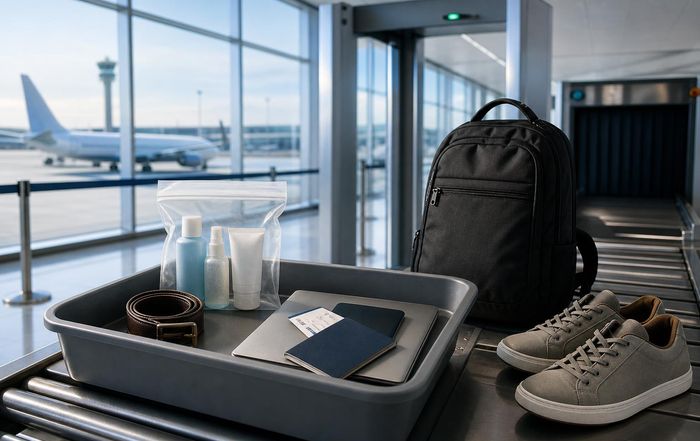
Packing decisions have a direct impact on how quickly a traveler can move through security checkpoints. Many delays result from misunderstandings about liquids, aerosols, gels, electronics, and prohibited items. While rules differ somewhat across regions, the familiar 100-milliliter limit for liquids in carry-on baggage remains widely enforced, especially in North America and many parts of Asia and Europe, although some European airports have begun easing these restrictions where CT scanners are fully deployed.
The TSA maintains an up-to-date list of what passengers can bring through U.S. security checkpoints, including details on liquids, powders, batteries, and special items such as sports equipment or musical instruments. Similarly, the European Commission provides information on aviation security rules in the EU, including guidance on cabin baggage restrictions and dangerous goods. Travelers transiting through or departing from the United Kingdom can consult the UK Government's hand luggage rules for specific requirements that may differ from those of the EU or other countries.
Where airports have implemented new-generation CT scanners, some are beginning to allow larger quantities of liquids and to permit laptops and large electronics to remain in bags, but these changes are not universal and may vary even between terminals. As a result, experts advise that travelers continue to prepare as if traditional liquid and laptop rules apply unless they have confirmed with their airline or departure airport that different procedures are in place. Business travelers and frequent flyers planning complex itineraries through WorldWeTravel can find additional practical guidance at worldwetravel.com/business.html, helping them pack efficiently for multiple jurisdictions.
It is also essential to understand prohibited items lists, which generally include weapons, certain tools, flammable substances, and some self-defense devices. While many of these bans are broadly consistent worldwide, there are variations in how items such as small knives, aerosols, or lithium batteries are treated, making it prudent to verify rules with both the departure and arrival authorities and with the airline itself.
At the Airport: Check-In, Security Lanes, and Screening Technologies
Once at the airport, the sequence from check-in to security screening can either be orderly and predictable or rushed and stressful, depending largely on how early the traveler arrives and how familiar they are with the process. Most international flights recommend arrival at least two to three hours before departure, and some long-haul or high-demand routes may suggest even more time, especially during peak travel seasons.
Many airlines now encourage or require online check-in, allowing passengers to obtain boarding passes on smartphones or at home, which can shorten lines at the airport. Airport and airline apps often provide real-time updates on security wait times and gate changes, and some hubs have introduced virtual queuing systems for security lanes. Travelers can consult resources such as ACI World to understand how airports are innovating in passenger flow management and digital services.
At security, passengers are typically required to present a boarding pass and, in many jurisdictions, a valid photo identification or passport. Screening procedures vary by airport and risk profile but often include walk-through metal detectors, millimeter-wave body scanners, x-ray machines for cabin baggage, and, in some cases, explosive trace detection. In the United States, programs such as TSA PreCheck and Global Entry offer expedited screening for pre-vetted travelers, while other regions have similar trusted traveler schemes. Detailed information on these programs can be found via the U.S. Department of Homeland Security's Trusted Traveler Programs portal.
For families, preparing children in advance for the security process can significantly reduce stress. Explaining that shoes, jackets, and sometimes stuffed animals may need to go through the x-ray machine, and rehearsing the idea of briefly walking through a scanner alone, can make the experience less intimidating. WorldWeTravel provides family-oriented tips and destination planning support at worldwetravel.com/destinations.html, helping parents integrate security preparation into the broader excitement of trip planning.
Navigating Border Control: Passports, Biometrics, and eGates
After security, the next major checkpoint is typically border control, where immigration authorities verify identity, travel purpose, and eligibility to enter or leave the country. This stage has undergone rapid modernization, with many airports now relying heavily on biometric technologies such as facial recognition, fingerprint scanning, and automated passport gates, especially for eligible citizens and residents.
The European Union has been progressively expanding the use of automated border control gates for holders of biometric passports, and the forthcoming Entry/Exit System (EES) is expected to further digitize the recording of arrivals and departures of non-EU nationals. Travelers can follow developments through the European Commission's pages on smart borders and EES. In the United States, U.S. Customs and Border Protection (CBP) has implemented biometric entry and exit programs at many ports, with details available on the CBP website.
While these technologies are intended to enhance both security and efficiency, they can occasionally lead to mismatches or require manual checks, particularly if a traveler's appearance has changed significantly since their passport photo was taken or if there are technical issues. Travelers are generally advised to remove hats, large sunglasses, and face coverings when prompted, and to follow the instructions of border officers and automated gate systems carefully.
Those using WorldWeTravel to coordinate multi-country trips across Europe, Asia, or the Americas can benefit from understanding how different border systems interact and where additional time might be required, particularly when transiting through hubs with separate security or immigration checks between flights. Guidance on global travel patterns and border trends is available at worldwetravel.com/global.html, providing a broader context for itinerary planning.
Special Considerations: Families, Business Travelers, and People with Disabilities
Different traveler profiles face distinct challenges at security and border controls, and many airports have developed tailored services to address these needs. Families with young children may be offered dedicated lanes, priority boarding, or additional assistance at security, though the availability of such services varies widely by airport and airline. Parents are encouraged to research family facilities, such as play areas and nursing rooms, through airport websites or through curated destination information at WorldWeTravel.
Business travelers, who often travel with laptops, tablets, presentation equipment, and sometimes product samples, must pay particular attention to customs rules and restrictions on commercial goods. Some countries require declarations for professional equipment or promotional materials, and failure to comply can lead to delays or penalties. Resources such as the World Customs Organization (WCO) and national customs websites, including HM Revenue & Customs in the UK or CBP in the United States, provide guidance on temporary importation and ATA carnets for professional equipment and trade samples. For business-focused travel strategies, WorldWeTravel offers insights and planning tools at worldwetravel.com/work.html.
Passengers with disabilities or reduced mobility should proactively inform airlines of their needs well before departure, typically at the time of booking or at least 48 hours in advance. Many jurisdictions have robust legal frameworks protecting the rights of disabled travelers, such as the U.S. Air Carrier Access Act and the EU Regulation (EC) No 1107/2006 on the rights of disabled persons and persons with reduced mobility when traveling by air. Official guidance from bodies such as the U.S. Department of Transportation's Aviation Consumer Protection office and the European Commission's passenger rights portal can help travelers understand what assistance they are entitled to receive.
Eco-Conscious and Responsible Travel Through Security and Borders
An increasing number of travelers are seeking to minimize their environmental footprint and travel in a way that respects local communities and ecosystems. This ethos extends naturally to how they approach security and border controls. By understanding and respecting customs regulations on wildlife products, cultural artifacts, and agricultural goods, travelers can help combat illegal trade and protect biodiversity.
Organizations such as TRAFFIC and the World Wildlife Fund (WWF) provide guidance on recognizing and avoiding illegal wildlife products, while UNESCO highlights the importance of protecting cultural heritage and discourages the unauthorized removal of artifacts. Many customs authorities publish lists of restricted and prohibited items that include endangered species, antiquities, and other sensitive goods, and travelers are strongly encouraged to consult these resources before purchasing souvenirs abroad.
For those who prioritize sustainability, WorldWeTravel offers eco-focused travel content at worldwetravel.com/eco.html, where readers can explore how to choose greener airlines and airports, offset emissions responsibly, and support local economies in ways that complement, rather than conflict with, regulatory frameworks at the border.
Practical Tips to Reduce Stress and Delays
Although every journey and every airport is unique, a few core practices consistently help travelers move more smoothly through security and border controls. Checking in online, arriving early, organizing documents in a readily accessible pouch, wearing easily removable shoes and minimal metal accessories, and pre-sorting liquids and electronics all contribute to a more predictable experience. Keeping devices charged and having backup copies of essential documents stored securely online can also be invaluable in the event of delays or lost items.
Travelers are advised to remain patient and courteous with security and border staff, who operate under demanding conditions and tight regulations. Clear communication, particularly when carrying medical devices, special dietary items, or religious garments, can help ensure that screenings are both respectful and compliant with policy. For those seeking more detailed, step-by-step guidance, WorldWeTravel provides a range of practical resources and advice at worldwetravel.com/tips.html, including checklists and planning tools designed to turn security preparation into a manageable part of trip organization rather than a last-minute concern.
The Role of Technology and the Future of Border Experience
Digital innovation is reshaping the way travelers interact with airports and borders. From mobile boarding passes and digital identity wallets to biometric verification and automated baggage drops, technology promises to reduce friction while maintaining or enhancing security. Initiatives such as IATA's One ID aim to create a seamless, paperless journey where a single biometric token can be used at multiple checkpoints, and pilot projects in regions including Europe, North America, and Asia are exploring how to integrate these systems while safeguarding privacy and data protection.
Travelers interested in the intersection of technology and travel can explore developments through resources such as IATA's One ID overview and specialized aviation technology analysis at outlets like FlightGlobal and Skift. For a traveler-focused perspective on how emerging tools, from digital health certificates to AI-powered border screening, may affect future journeys, we provide technology-oriented coverage at worldwetravel.com/technology.html, helping readers stay ahead of trends that could shape their next trip.
While these innovations promise convenience, they also raise important questions about data security, consent, and equity of access. Regulators, privacy advocates, and industry stakeholders continue to debate how best to balance efficiency with fundamental rights, and travelers are encouraged to stay informed and to understand what data is collected, how it is used, and what choices they have when participating in biometric or digital identity programs.
Turning Security and Border Controls into a Confident Part of Travel
The final section ends here, but there is no shortage of ideas worth exploring. Curiosity always leaves room for another discovery!
For many travelers, airport security and border controls have long been associated with stress, uncertainty, and lost time. Yet with thoughtful preparation, reliable information, and an understanding of how modern screening and immigration systems operate, these checkpoints can become manageable, even predictable, components of a journey. By verifying documentation early, respecting health and customs regulations, packing with security in mind, and making use of digital tools and trusted traveler programs where appropriate, passengers can reclaim much of the time and peace of mind that these processes once consumed.
The hard-working travel and news team is committed to helping travelers transform this part of the experience from a source of anxiety into an opportunity for confidence and control. Whether planning a family holiday, a business mission, a wellness retreat, or an extended exploration of new cultures, happy individuals can rely on worldwetravel.com as a partner in navigating the evolving world of airport security and border controls. By combining authoritative external resources with practical, traveler-centered insights, we aim to ensure that every journey begins and ends with clarity, safety, and a sense of positive anticipation for what lies beyond the checkpoint.