

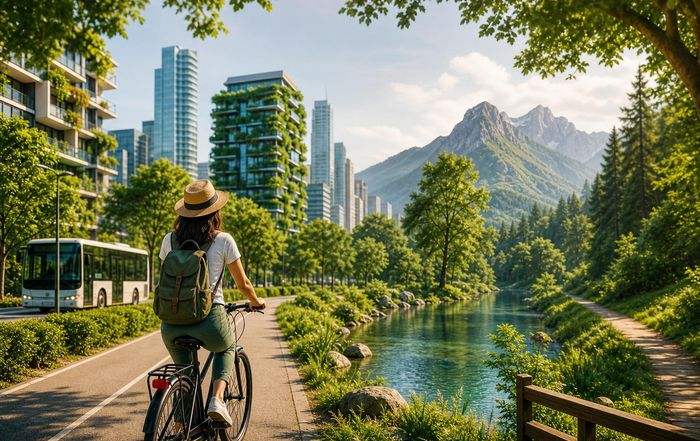
Eco-Friendly Ways to Explore Cities and Natural Areas
Urban skylines and wild landscapes no longer sit at opposite ends of the travel spectrum. Around the world, travelers are discovering that it is possible to move between city streets and mountain trails with a lighter footprint, choosing experiences that protect the places they love rather than placing them at risk. For WorldWeTravel, whose community is deeply interested in destinations, culture, health, family adventures, and sustainable escapes, eco-friendly exploration is not a niche trend but a central pillar of responsible travel.
As climate science has become clearer, organizations such as the Intergovernmental Panel on Climate Change (IPCC) have repeatedly highlighted the role of transport emissions in global warming, with aviation and private car use standing out as major contributors. At the same time, cities and protected areas from North America and Europe to Asia and Africa have been investing in cleaner mobility, greener infrastructure, and community-based tourism that supports local livelihoods. This combination of traveler awareness and destination innovation is reshaping how people move through the world, from a weekend break in London or Singapore to a hiking journey in the Alps or a safari in South Africa.
The following exploration looks at practical, evidence-based ways to experience cities and natural areas more sustainably, while still embracing comfort, culture, and discovery. It draws on guidance from leading organizations including the United Nations World Tourism Organization (UNWTO), UN Environment Programme (UNEP), World Wildlife Fund (WWF), and national tourism boards, alongside the on-the-ground insights that shape the guides and resources at WorldWeTravel.
Rethinking Urban Mobility: Low-Carbon Ways to Move Through Cities
For most travelers, the city is the gateway to any journey, whether that city is New York, Berlin, Tokyo, Cape Town, or São Paulo. Urban transportation is also one of the biggest levers for reducing a trip's environmental impact. Studies compiled by the International Energy Agency (IEA) indicate that shifting from private car use to public transport, walking, and cycling can significantly reduce per-person emissions in dense urban areas.
An increasing number of cities in Europe, North America, and Asia have been investing heavily in efficient, electrified public transit. Visitors to London can rely on the Transport for London network of Underground, buses, and overground rail, which has seen growing deployment of electric and hybrid buses and contactless payment to streamline multi-modal journeys. In Paris, the RATP system continues to extend metro and tram lines, while cities such as Amsterdam and Copenhagen have become global models for integrated cycling infrastructure, with extensive bike lanes and secure parking that make it simple for visitors to rent a bicycle for the day.
In Asia, Singapore's Land Transport Authority has expanded its Mass Rapid Transit (MRT) network and introduced incentives for public transport use, while Tokyo Metro and Toei Subway connect almost every major district with frequent, punctual trains that are typically more energy-efficient per passenger than private vehicles. North American cities such as Vancouver and Montreal have been expanding bike-share and bus rapid transit, and several, including New York and Los Angeles, have introduced low-emission or zero-emission buses into their fleets.
For travelers planning urban itineraries, a practical approach is to select accommodations that are close to transit hubs or walkable neighborhoods, reducing the need for ride-hailing services or rental cars. The hotel selection tools and guides at WorldWeTravel Hotels can help identify properties that combine central locations with strong sustainability commitments, such as energy-efficient design, waste reduction, and partnerships with local communities. Travelers can also consult city tourism portals, such as Visit London, NYC Tourism + Conventions, or Visit Berlin, for up-to-date maps of public transport, bike-share programs, and pedestrian-friendly districts.
Walking and Cycling: Slower, Deeper, and Cleaner Connections
Walking and cycling remain the most fundamentally eco-friendly ways to experience a destination, and they often provide the most intimate connection with local culture and daily life. Research shared by organizations such as Walk21 and the European Cyclists' Federation underscores the health benefits and emissions savings associated with active travel, while also noting that well-designed streetscapes can reduce traffic congestion and improve air quality for residents.
In historic European cities such as Florence, Seville, and Amsterdam, pedestrian zones and car-free streets allow travelers to explore markets, museums, and neighborhoods without noise and exhaust fumes. In North American cities, districts such as New York's High Line and Chicago's Riverwalk have turned former industrial or transport corridors into linear parks that invite slow, reflective exploration. Asian cities including Kyoto and Seoul have invested in riverside paths and traditional quarters where walking reveals small shrines, craft shops, and family-run eateries that are easily missed from a car window.
Cycling has also become a core component of eco-friendly travel. Public bike-share schemes now operate in cities from London, Paris, and Barcelona to Washington, D.C., Toronto, and Melbourne, with many offering day passes or app-based rentals that allow visitors to move freely without the burden of ownership. In some cities, such as Copenhagen and Utrecht, the cycling culture is so deeply embedded that bike traffic often outnumbers car traffic in central areas, creating a calm, human-scale environment that many travelers find refreshing.
When planning an itinerary that emphasizes walking or cycling, visitors can use resources such as OpenStreetMap or local tourism websites to identify safe routes, green corridors, and scenic paths. The destination-focused pages at WorldWeTravel Destinations often highlight neighborhoods and city sections where active exploration is especially rewarding, along with cultural and culinary stops that enrich the journey. For families traveling with children, the guides at WorldWeTravel Family can help identify stroller-friendly walks, parks, and bike routes that balance adventure with safety and rest.
Public Transit as a Cultural Experience
Eco-friendly travel is not only about emissions; it is also about engaging more meaningfully with local life. Urban public transport can become a cultural experience in itself, offering a glimpse into the rhythms and routines of residents. The tram networks of Lisbon and Zurich, the ferries of Sydney and Hong Kong, and the subway systems of New York, London, and Seoul all reflect different histories, design philosophies, and social patterns.
The UNWTO has highlighted public transport as a key pillar of sustainable urban tourism, emphasizing that visitors who use local systems contribute to their financial viability and help justify further investment in clean technology. Many cities now provide integrated transport cards or passes that cover buses, trams, and trains for a set period, such as the Swiss Travel Pass in Switzerland or the Octopus card in Hong Kong, simplifying logistics for travelers while encouraging multi-modal journeys.
From an eco-conscious perspective, rail-based systems and electric buses are generally more efficient per passenger-kilometer than individual car travel, although the precise environmental benefit depends on factors such as occupancy rates and the electricity mix used for power generation. Travelers who wish to understand these nuances can consult resources from the IEA or European Environment Agency, which provide comparative analyses of transport modes.
At WorldWeTravel, the emphasis on Travel Tips includes practical guidance for navigating complex systems, such as using transit apps, understanding fare structures, and traveling outside peak commuting hours to reduce crowding. For families, seniors, and travelers with limited mobility, public transport may require additional planning, but many cities have made accessibility a priority, with elevators, ramps, and priority seating that support more inclusive, sustainable mobility.
Rail Journeys Between Cities: A Lower-Carbon Alternative
Beyond city limits, rail travel has emerged as one of the most effective ways to reduce the environmental impact of regional and international trips, especially within Europe and parts of Asia where high-speed networks are well developed. According to analyses from the European Environment Agency and International Union of Railways (UIC), rail transport generally emits significantly less CO₂ per passenger-kilometer than air travel on comparable routes, particularly when powered by low-carbon electricity.
In Europe, high-speed services such as Eurostar, TGV, ICE, and AVE connect major cities including London, Paris, Berlin, Madrid, Amsterdam, and Milan, often delivering city-center to city-center travel times that rival or beat air once airport transfers and security procedures are factored in. Night trains have experienced a resurgence, with operators such as ÖBB Nightjet reintroducing sleeper services linking cities like Vienna, Berlin, Zurich, and Rome, allowing travelers to save on accommodation while minimizing emissions.
In Asia, Japan's Shinkansen, China's high-speed rail network, and services such as KTX in South Korea and Vande Bharat Express in India have transformed domestic and regional connectivity. Many of these systems are supported by national policies that recognize rail as a strategic asset for low-carbon mobility and economic development. Travelers can plan complex rail itineraries using platforms like Eurail, Rail Europe, or national rail operators, often combining high-speed segments with scenic regional lines that pass through countryside, mountains, and coastal areas.
For those exploring the relationship between mobility and the broader travel economy, the insights at WorldWeTravel Economy examine how investments in rail infrastructure can stimulate local tourism, reduce congestion, and create new opportunities for rural communities. At the same time, it is important to acknowledge that in some regions, particularly parts of Africa, South America, and North America, long-distance rail remains limited or less reliable, requiring a pragmatic balance between air, bus, and car travel while still applying eco-conscious principles.
Gentle Approaches to Natural Areas: Leave No Trace in Practice
When travelers leave the city and step into national parks, forests, coastlines, and wildlife reserves, the responsibility to tread lightly becomes even more important. Organizations such as Leave No Trace Center for Outdoor Ethics, WWF, and the International Union for Conservation of Nature (IUCN) have developed widely recognized guidelines that help visitors minimize their impact on fragile ecosystems, from alpine meadows and coral reefs to savannas and rainforests.
Key principles include staying on marked trails to prevent erosion, packing out all waste, avoiding disturbance of wildlife, and respecting local regulations on campfires, drones, and noise. In many destinations, park authorities now provide clear signage and educational materials that explain why certain areas are off-limits or restricted, often to protect nesting sites, restore vegetation, or safeguard endangered species. Travelers who take the time to understand these measures contribute directly to conservation efforts and help ensure that natural areas remain resilient in the face of climate change and increasing visitor numbers.
Eco-friendly exploration of natural areas can take many forms. In the Alps, hikers follow well-maintained paths between mountain huts, often managed in partnership with local communities and alpine clubs. In North America, national parks such as Yellowstone, Banff, and Yosemite offer shuttle buses and designated viewpoints that reduce the need for private cars and concentrate visitor impact in more manageable zones. In South Africa, Kenya, and Tanzania, responsible safari operators work within conservancies and national parks that prioritize habitat protection and community benefits, with guidelines on vehicle numbers, viewing distances, and off-road driving.
For travelers planning nature-focused journeys, the WorldWeTravel Eco and Retreat sections provide inspiration for low-impact stays, from eco-lodges and wellness retreats to volunteer programs that support reforestation or marine conservation. It is advisable to cross-check operators with recognized certification schemes or conservation partners and to consult resources such as Protected Planet or national park services for accurate, up-to-date information on conditions, regulations, and safety.
Choosing Greener Accommodation: From Eco-Hotels to Community Stays
Accommodation choices can significantly influence the environmental and social footprint of a journey. Over the past decade, a growing number of hotels, guesthouses, and resorts have adopted sustainability practices that go beyond simple towel-reuse programs, incorporating energy-efficient design, water conservation, waste reduction, and local sourcing into their core operations. Independent certification schemes such as Green Key, EarthCheck, and LEED provide frameworks for assessing and recognizing these efforts, although their criteria and regional coverage vary.
In cities, eco-conscious properties may use renewable energy, smart lighting, and efficient heating and cooling systems, while also offering amenities such as filtered water stations to reduce single-use plastics. In rural and coastal areas, eco-lodges often integrate with the surrounding landscape, using local materials, supporting nearby farms and artisans, and involving communities in decision-making. Some destinations, such as Costa Rica and parts of Scandinavia, have become known for their strong emphasis on sustainable hospitality, supported by national tourism strategies and environmental regulations.
Travelers can research accommodation sustainability by consulting hotel websites, independent reviews, and third-party verifiers. Platforms such as Booking.com, Tripadvisor, and Sustainable Travel International provide information on eco-certifications and initiatives, though it remains important to read details carefully and be aware that not all claims are equally robust. The curated listings and advice at WorldWeTravel Hotels aim to highlight properties that demonstrate genuine commitment to environmental and social responsibility, across budget ranges and regions.
Community-based tourism, homestays, and agritourism can also offer eco-friendly benefits when managed thoughtfully. By staying in locally owned accommodations, travelers help keep economic value within the community, support cultural preservation, and often gain deeper insight into daily life. Organizations such as UNESCO and UNDP have documented how such models, when grounded in fair partnerships and respect for local rights, can contribute to both conservation and poverty reduction.
Family-Friendly Sustainability: Teaching the Next Generation
Families traveling with children have a unique opportunity to weave sustainability into shared experiences, turning eco-friendly choices into stories and memories rather than abstract principles. This can begin with simple steps, such as choosing train journeys over short-haul flights where feasible, walking or cycling between city attractions, and packing reusable water bottles and containers to reduce waste.
Many museums, science centers, zoos, and aquariums now include exhibits and programs focused on climate, biodiversity, and sustainable living, often designed to be interactive and age-appropriate. Institutions such as the Natural History Museum in London, the California Academy of Sciences in San Francisco, and the Singapore Science Centre provide engaging introductions to topics such as ocean health, renewable energy, and wildlife conservation. Families can combine these visits with time in urban parks, botanical gardens, and nature reserves, reinforcing the connection between knowledge and lived experience.
The WorldWeTravel Family section offers ideas for itineraries that balance education, adventure, and relaxation, from cycling along safe waterfront paths in Copenhagen or Vancouver to exploring national parks in the United States, Canada, or New Zealand with ranger-led activities. Health-oriented content at WorldWeTravel Health complements this by highlighting the physical and mental benefits of active, nature-rich travel for both adults and children, supported by research from organizations such as the World Health Organization (WHO) on the importance of green space and physical activity.
By involving children in planning-choosing a train route, mapping a walking tour, or selecting a wildlife-friendly eco-lodge-families can nurture a sense of agency and responsibility that extends beyond a single trip. These early experiences can shape how the next generation views mobility, consumption, and the shared stewardship of common spaces.
Technology as an Enabler of Eco-Friendly Travel
Digital tools increasingly help travelers make more sustainable decisions without sacrificing convenience. Route-planning apps can prioritize public transit, walking, or cycling, while carbon calculators from organizations such as Atmosfair or MyClimate estimate emissions from different modes of transport and offer options for high-quality carbon offsetting or, more ambitiously, insetting through direct support of climate projects connected to travel providers.
Many cities and regions now provide open data on transit schedules, bike-share availability, and air quality, accessible through apps and websites, allowing visitors to adapt plans in real time. Hotel and booking platforms have begun to highlight sustainability features, though the depth and consistency of this information vary, and independent verification remains essential. Translating and mapping tools help travelers navigate local markets, public transport, and community-run experiences that might otherwise remain inaccessible, spreading tourism benefits more widely.
At WorldWeTravel Technology, the focus is on how innovation can support low-impact journeys, from electric mobility and smart city infrastructure to digital nomadism that favors longer, slower stays over frequent short trips. Remote work, discussed in more detail at WorldWeTravel Work, has enabled some travelers to adopt "workcation" models where they spend extended periods in one location, building deeper relationships with local communities and reducing the frequency of long-distance flights.
Nevertheless, technology is not a panacea. Data centers, devices, and networks have their own environmental footprints, and there is ongoing debate among researchers about the net impact of digitalization on travel demand. Some studies suggest that easy online booking and social media inspiration can increase the number of trips people take, while others highlight the potential for virtual meetings and events to replace certain business journeys. A balanced perspective acknowledges these complexities while still leveraging digital tools to make each necessary trip as responsible as possible.
Business Travel and the Shift to Purposeful Journeys
Corporate travel has traditionally been a significant driver of flights and hotel stays, particularly between major business hubs in the United States, United Kingdom, Germany, Singapore, Japan, and other leading economies. In recent years, many organizations have begun to reassess their travel policies in light of climate commitments, cost considerations, and the demonstrated effectiveness of virtual collaboration tools.
Reports from consultancies such as McKinsey & Company and professional associations like the Global Business Travel Association (GBTA) indicate that companies are increasingly prioritizing trips that deliver clear strategic value, consolidating meetings, and encouraging rail use for regional journeys, especially in Europe. Some organizations have introduced internal carbon budgets or shadow pricing to make the climate cost of travel more visible in decision-making, while others have invested in sustainable aviation fuel (SAF) partnerships or high-integrity carbon projects as interim measures while technology and infrastructure evolve.
For business travelers seeking to align professional obligations with personal values, the resources at WorldWeTravel Business provide guidance on selecting greener hotels, optimizing itineraries to reduce transfers, and making the most of time on the ground through walking meetings, local dining, and cultural exploration. Combining business trips with a few days of leisure, sometimes called "bleisure," can also help reduce total travel frequency by encouraging longer, more meaningful stays rather than multiple short visits.
A Global Perspective on Eco-Friendly Exploration
Eco-friendly ways to explore cities and natural areas are shaped by geography, infrastructure, policy, and culture, and therefore look different in Scandinavia than in Southeast Asia, in North America than in Southern Africa. In some regions, electrified rail and dense public transport networks make low-carbon travel relatively straightforward. In others, limited infrastructure, long distances, or economic constraints require a more incremental approach, focusing on choices such as shared transport, efficient routing, support for local businesses, and respect for protected areas.
International frameworks, including the UNWTO's Global Code of Ethics for Tourism and the Glasgow Declaration on Climate Action in Tourism, encourage destinations and industry stakeholders to align around common principles, such as emissions reduction, ecosystem protection, and community engagement. At the same time, local initiatives-from bike-sharing in Bogotá to community conservancies in Namibia and forest-based tourism in Finland-demonstrate that innovation can emerge in diverse contexts.
For the community of WorldWeTravel, which spans continents and cultures, the common thread is an aspiration to experience the world more thoughtfully, balancing curiosity and comfort with a sense of responsibility toward both host communities and future generations. Whether planning a family holiday in Canada, a cultural journey through Italy and Spain, a business trip to Singapore or Tokyo, or an adventure across South Africa or Brazil, travelers can use the interconnected guides at WorldWeTravel Travel, Culture, Global, and other sections to shape itineraries that reflect their values.
As transport technologies evolve, cities redesign their streets, and protected areas adapt to environmental change, eco-friendly exploration will continue to evolve. Yet the core principles-moving more slowly, choosing lower-impact options, supporting local communities, and treating every place with care-remain constant. In embracing these principles, travelers do more than reduce their carbon footprint; they open themselves to richer, more authentic encounters with the people and places that make our shared planet extraordinary.