

How to Handle Language Barriers While Traveling Abroad
Language is one of the most powerful gateways into another culture, yet for many travelers it can also feel like a wall. As global travel rebounds and expands, more people are venturing beyond familiar linguistic comfort zones, discovering both the challenges and the profound rewards of communicating across languages. For widely travelled individuals, understanding how to navigate these barriers is not only a practical skill but also a pathway to more meaningful, respectful, and memorable journeys.
Why Language Barriers Matter More Than Ever
International tourism has been steadily recovering since the disruptions of the early 2020s, with the UN World Tourism Organization reporting that many regions are approaching or surpassing pre-pandemic arrival levels. As travelers spread out to destinations from major hubs like the United States, United Kingdom, Germany, Canada, and Australia to emerging hotspots in Asia, Africa, and South America, the likelihood of encountering unfamiliar languages increases significantly.
At first glance, language barriers might appear to be simply a matter of ordering food or asking for directions, yet research in intercultural communication, such as work published by Harvard Business Review and the Journal of Cross-Cultural Psychology, shows that language is tightly interwoven with cultural values, norms, and expectations. Misunderstandings can affect safety, health, financial decisions, and interpersonal relationships. Conversely, even small efforts to bridge language gaps can create goodwill, open doors, and deepen a traveler's sense of connection.
For WorldWeTravel readers who explore diverse destinations across continents, mastering the art of handling language barriers is a cornerstone of confident and responsible travel.
Preparing Before You Go: Building a Linguistic Foundation
The most effective way to handle language barriers abroad begins long before boarding a plane. Preparation does not require fluency; it requires intention. Linguists and travel educators consistently recommend learning a core set of phrases in the local language, not only for utility but also to signal respect. Basic expressions such as greetings, "please," "thank you," "excuse me," "I'm sorry," "Do you speak English?", and "I don't understand" can significantly soften interactions and encourage locals to assist.
Institutions like Duolingo, Babbel, and Rosetta Stone offer structured courses for many languages, and their methodologies are informed by established principles in second-language acquisition. Learners can complement these with free resources such as the BBC Languages archive (still widely referenced despite being archived) and phrase lists from national tourism boards or cultural institutes like the Goethe-Institut for German or the Institut Français for French. Travelers heading to Japan, for example, can consult the Japan National Tourism Organization for practical language tips, while those visiting Spain may find helpful materials from Instituto Cervantes.
For families planning multi-generational trips, involving children in basic language learning can be both educational and empowering. Parents can turn preparation into a shared project, integrating language apps, flashcards, and cultural videos, and then reinforce these lessons with real-world practice on arrival. WorldWeTravel's readers who focus on family travel often find that children's enthusiasm for trying new words helps adults overcome their own shyness.
Using Technology Wisely and Responsibly
Digital tools have transformed how travelers manage language challenges. Smartphone-based translation services, particularly Google Translate, Microsoft Translator, and DeepL, offer text, voice, and image translation that can be invaluable in restaurants, transportation hubs, and medical settings. These tools rely on machine learning models trained on massive multilingual corpora, and while they have improved dramatically over the last decade, their accuracy still varies by language pair and context.
Studies reviewed by organizations such as MIT Technology Review and academic analyses in computational linguistics indicate that translations between widely used languages like English, Spanish, French, and German tend to be more reliable than those involving lower-resource languages. Travelers should therefore treat machine translation as an assistant rather than an authority, especially when dealing with sensitive or complex topics. When interpreting safety instructions, legal documents, or medical advice, it is prudent to cross-check information, ask clarifying questions, and, where possible, consult a human professional.
Real-time translation earbuds and handheld devices, marketed by companies such as Timekettle and Pocketalk, have gained popularity among frequent travelers and business professionals. Independent reviews by outlets like Wirecutter (from The New York Times) and PCMag generally find these devices helpful in structured conversations but subject to connectivity issues, background noise, and the same contextual limitations as phone apps. Travelers using them in business or diplomatic settings should still rely on professional interpreters for high-stakes negotiations, a practice recommended by organizations such as the International Association of Conference Interpreters.
For WorldWeTravel readers interested in the intersection of travel and innovation, exploring how translation tools are evolving is part of a broader engagement with travel technology. However, even the most advanced devices work best when combined with human empathy, patience, and a willingness to simplify language.
Communicating Beyond Words: Nonverbal Strategies
When spoken language falters, nonverbal communication often carries the conversation forward. Anthropologists and cross-cultural psychologists have long noted that gestures, facial expressions, and posture can convey warmth, openness, and respect, yet they also caution that nonverbal cues vary widely across cultures. For instance, research summarized by The Cultural Atlas and Hofstede Insights highlights that direct eye contact may be seen as confident in many Western societies but as confrontational or disrespectful in some other contexts. Similarly, hand gestures commonly used in North America or Europe can have very different meanings in parts of Asia, South America, or the Middle East.
To navigate these nuances, travelers can study basic cultural etiquette for their destination through resources like Culture Crossing, the CIA World Factbook, or government travel advisories such as the UK Foreign, Commonwealth & Development Office and the U.S. Department of State. Learning whether to bow, shake hands, or avoid physical contact altogether, and understanding norms around personal space, can prevent misunderstandings before they occur.
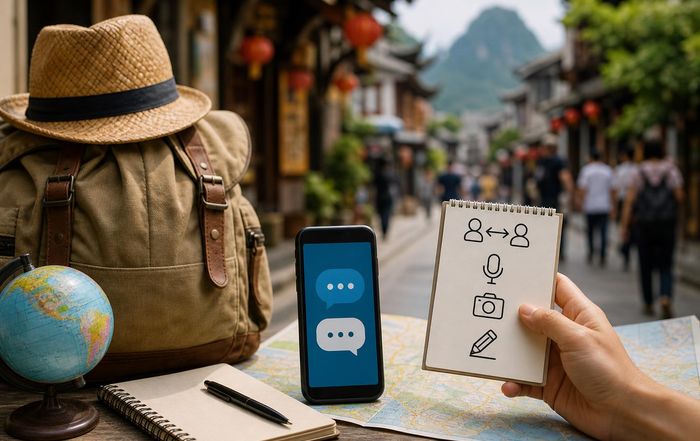
Visual aids also play a critical role. Carrying a small notebook for drawing, using photos on a phone, or pointing to items on a menu can bridge gaps quickly. Some travelers assemble simple picture cards for common needs such as food, transportation, lodging, and medical assistance. For guests booking accommodations through WorldWeTravel's hotels section, communicating preferences or allergies with a combination of translated text and icons can reduce confusion at check-in.
Safety, Health, and Emergencies: When Clarity Is Critical
Language barriers become more than an inconvenience when they intersect with safety, health, and legal issues. International health organizations, including the World Health Organization and Centers for Disease Control and Prevention, emphasize that travelers should prepare for medical communication challenges well in advance. This preparation can include carrying written translations of key medical information such as allergies, chronic conditions, current medications, and emergency contacts in both English and the local language.
Travelers with complex medical histories are often advised by health professionals to obtain a letter from their doctor, ideally translated by a qualified human translator rather than an automated tool. In many destinations, hospitals that cater to international patients, particularly in cities across Europe, Asia, and the Middle East, provide multilingual staff or interpretation services. Reputable sources such as JCI (Joint Commission International) maintain lists of accredited hospitals worldwide, which can be a useful reference when selecting travel insurance or planning medical tourism.
Travel insurance providers, including major companies referenced by organizations like Consumer Reports and Which?, frequently offer 24/7 assistance lines with multilingual operators. Travelers should store these numbers offline and test whether their mobile plans support international calls. For emergencies involving local authorities, learning how to say or show "I need help," "Call an ambulance," or "Call the police" in the local language can be lifesaving.
WorldWeTravel's health and tips resources often encourage travelers to think through worst-case scenarios before departure. By combining language preparation with sound health planning, travelers can reduce anxiety and respond more effectively if problems arise.
Hospitality, Hotels, and Everyday Interactions
Accommodation is often the setting where language barriers are felt most acutely yet can also be the place where they are most gracefully resolved. Many hotels in major cities across the United States, United Kingdom, Germany, France, Italy, Spain, Japan, Singapore, and other popular destinations employ multilingual staff, particularly at the front desk and concierge. International chains and well-rated boutique hotels frequently highlight language capabilities on their websites or booking platforms, a practice encouraged by hospitality organizations such as the World Travel & Tourism Council.
Independent guesthouses, agriturismos, and family-run lodgings, especially in rural areas of Europe, Asia, and South America, may rely more heavily on local languages. In these settings, travelers who prepare a few targeted phrases related to check-in, payment, breakfast times, and transportation can smooth the experience considerably. Writing down arrival times, special requests, or dietary restrictions and presenting them at check-in, possibly with a translated version, reduces stress for both guests and hosts.
For travelers who rely on digital booking services, cross-checking property information across multiple platforms and reading reviews from other international visitors can provide insight into how well language issues are handled. Reputable review aggregators like Tripadvisor and Booking.com can be helpful, though travelers should remain aware of the limitations and potential biases in user-generated content. Combining these external references with curated recommendations from WorldWeTravel's hotels guide offers a more reliable picture.
Ultimately, many hosts appreciate any effort to communicate, even if vocabulary is limited. Smiles, patience, and a modest willingness to laugh at one's own mistakes often transform awkward exchanges into shared stories that travelers remember fondly.
Family Travel: Turning Barriers into Learning Moments
Families traveling together experience language barriers through multiple lenses: parents worry about logistics and safety, while children and teenagers often focus on social interactions and curiosity. Educational experts and child psychologists note that exposure to new languages can support cognitive flexibility, empathy, and resilience, particularly when adults model positive attitudes toward uncertainty and misunderstanding.
Parents can involve children in planning by assigning them simple language "missions," such as learning how to say hello, thank you, and goodbye in the local language, or practicing how to order an ice cream or ask for the restroom. Research cited by organizations like UNICEF and UNESCO on multilingual education underscores that children are typically less self-conscious about pronunciation and more willing to experiment, which can lighten the atmosphere for the whole family.
When choosing destinations, families can consult WorldWeTravel's family and travel sections for guidance on regions where infrastructure, signage, and services are particularly supportive of international visitors. Countries such as Canada, Netherlands, Sweden, Denmark, Singapore, and New Zealand are often praised in global rankings for traveler-friendliness and English proficiency, as reported by sources like EF Education First's English Proficiency Index, although such rankings should be interpreted as broad indicators rather than guarantees.
By framing language barriers as an adventure rather than an obstacle, families can nurture globally aware children who are better prepared for future study, work, and travel.
Cultural Respect and Responsible Travel
Language is inseparable from culture, and how travelers handle linguistic differences sends a powerful message about their attitudes toward local communities. Scholars in intercultural ethics and organizations such as UNESCO emphasize that respectful communication is a cornerstone of sustainable and responsible tourism. Speaking slowly and clearly, avoiding slang and idioms, and resisting the temptation to raise one's voice when not understood are small but meaningful forms of courtesy.
Travelers can deepen their understanding of local perspectives by engaging with cultural institutions, museums, and community-based tourism initiatives that promote language and heritage preservation. For example, indigenous language revitalization projects in countries like New Zealand, Canada, and South Africa highlight the importance of linguistic diversity as a form of cultural resilience. Resources from bodies such as the Permanent Forum on Indigenous Issues at the United Nations document both the challenges and successes of these efforts.
For readers of WorldWeTravel who prioritize eco-conscious and cultural travel, choosing tours and experiences led by local guides, even when language skills are uneven, can distribute economic benefits more fairly and provide richer insights. Simple gestures, such as learning how to say "thank you for sharing your culture" in the local language, reinforce mutual respect and acknowledgment.
Business and Work Travel: Professional Communication Across Languages
Business travelers face distinct language challenges, particularly in high-stakes meetings, negotiations, and presentations. International business research, including guidance from Harvard Business School and professional bodies like the Society for Human Resource Management, underscores that misunderstandings in tone, formality, and indirectness can have as much impact as vocabulary gaps.
In many multinational organizations, English functions as a common corporate language, yet assuming that all partners are equally comfortable in English can create tension and inequity. Best practices include circulating written agendas and materials in advance, using clear and straightforward language, and confirming understanding through follow-up emails. When critical legal or financial issues are at stake, hiring professional interpreters or translators, certified by associations such as the American Translators Association or Chartered Institute of Linguists, is widely regarded as essential.
For professionals planning work-related trips, the business and work sections of WorldWeTravel can help identify destinations and venues where multilingual services, conference facilities, and reliable connectivity support cross-border collaboration. Meanwhile, cross-cultural training programs, offered by universities and consulting firms worldwide, can prepare executives and teams to navigate both language and cultural nuances more effectively.
Global Perspectives: Language, Equity, and Access
From a broader global perspective, language barriers intersect with issues of equity, accessibility, and inclusion. Reports by organizations such as the World Bank and OECD highlight that linguistic minorities, migrants, and refugees often face significant obstacles in accessing services, education, and employment, challenges that are sometimes mirrored in how they interact with tourists. Travelers who are attentive to these dynamics can contribute, in small but meaningful ways, to more inclusive global mobility.
In many cities across Europe, Asia, and North America, community initiatives and NGOs provide language support and cultural mediation services. While these programs primarily serve residents, they also reflect a growing recognition that multilingualism is a structural feature of modern societies rather than an exception. Academic centers like the Max Planck Institute for Psycholinguistics and the Language Policy Programme of the Council of Europe continue to study how language policies shape social cohesion, tourism, and economic development.
WorldWeTravel's global and economy coverage often touches on how cross-border travel, trade, and digital communication are reshaping expectations around language learning and translation technologies. As more travelers move between continents, the ability to navigate linguistic diversity becomes not just a personal asset but a collective skill.
Practical Mindsets: Patience, Curiosity, and Humility
Beyond tools and techniques, the most reliable way to handle language barriers while traveling is to cultivate certain mindsets. Experienced travelers, educators, and intercultural trainers consistently emphasize patience, curiosity, and humility as the foundations of successful cross-language communication. Patience allows conversations to unfold at a slower pace, with repetition and clarification; curiosity encourages questions about meaning, customs, and stories; humility acknowledges that misunderstandings are inevitable and can be resolved with good will.
Travelers who accept that they will make mistakes, mispronounce words, and occasionally cause confusion often find that locals respond with generosity rather than frustration. Many people around the world, from café owners in Italy to market vendors in Thailand and train attendants in Japan, encounter language barriers daily and have developed their own strategies: using gestures, writing down numbers, or switching to a shared third language. Meeting these efforts halfway can transform a transactional interaction into a shared human moment.
For those planning retreats or wellness-focused journeys, the retreat and culture sections of the site provide inspiration for slower, more immersive travel styles that naturally encourage deeper engagement with local languages and customs.
Toward More Connected Journeys
Handling language barriers while traveling abroad is not about eliminating difficulty; it is about transforming potential obstacles into opportunities for connection. In a world where international mobility, digital communication, and cultural exchange continue to expand, the skills and attitudes developed through cross-language encounters have value far beyond any single trip.
By preparing thoughtfully, using technology judiciously, respecting cultural norms, and approaching every interaction with patience and openness, travelers can move through unfamiliar linguistic landscapes with confidence. In doing so, they not only enrich their own experiences but also contribute to a more understanding and interconnected global community.
For fans of worldwetravel, each journey, whether to a neighboring country or a distant continent, becomes a chance to practice these skills, to listen as much as to speak, and to discover that even when words fail, shared humanity rarely does.