

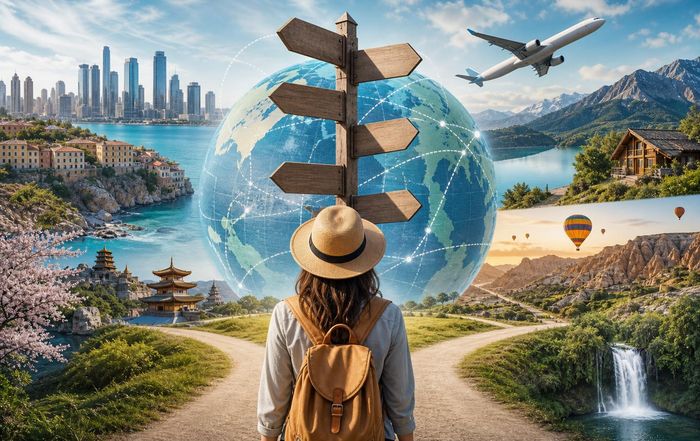
How Global Travel Trends Are Changing Destination Choices
A new era of choosing where - and why - to travel
Around the world, travelers are rethinking not only how they move, but why they go and where they choose to spend their time and money. From families planning multigenerational vacations and remote workers seeking long-stay "workcations," to climate-conscious explorers and wellness-focused retreat seekers, a complex web of global trends is reshaping the map of desirable destinations. For this little online travel community that spans every continent and a wide range of lifestyles, understanding these shifts is essential to helping readers make informed, inspiring, and responsible choices about their next journey.
In this rapidly evolving landscape, traditional tourism powerhouses like the United States, France, Italy, Spain, and the United Kingdom remain deeply attractive, yet they are now sharing attention with emerging destinations in Asia, Africa, and South America, as well as lesser-known regions within familiar countries. At the same time, digital tools, sustainability commitments, health considerations, and economic realities are all influencing which destinations rise to the top of travelers' wish lists. The result is a more intentional style of travel, in which destination choices are increasingly guided by values, wellbeing, and the search for authentic connection.
From bucket lists to purpose-driven itineraries
One of the most significant shifts observed by organizations such as the World Travel & Tourism Council (wttc.org) and the United Nations World Tourism Organization (unwto.org) is the move away from purely "bucket list" travel toward more purpose-driven itineraries. While iconic sites like the Grand Canyon, the Eiffel Tower, and Kyoto's temples remain aspirational, many travelers now weave them into trips that prioritize personal growth, cultural understanding, and positive local impact.
Surveys by groups including Booking.com and Expedia Group indicate that a growing share of travelers say they choose destinations based on opportunities for meaningful experiences, such as learning local crafts, participating in community-based tourism, or engaging in conservation projects. This aligns with the rising interest in slow travel, in which visitors spend longer periods in fewer places, often in smaller towns and regions beyond crowded capitals. On WorldWeTravel, this shift is reflected in demand for deeper destination insights, such as regional guides in the Destinations section (worldwetravel.com/destinations.html) that go beyond standard city breaks.
Purpose-driven travel also influences family decisions. Parents increasingly seek destinations where children can encounter nature, history, and diverse cultures in ways that feel engaging and age-appropriate. Museums with interactive exhibits, national parks with junior ranger programs, and community homestays that welcome families are gaining popularity, with many of these experiences highlighted in family-focused resources on WorldWeTravel (worldwetravel.com/family.html).
The rise of sustainability and "regenerative" destinations
Environmental awareness has become a central force in destination choice, with travelers paying closer attention to their footprint and the sustainability policies of the places they visit. Reports from the OECD (oecd.org/tourism) and UN Environment Programme (unenvironment.org) note increased interest in low-carbon transport, nature-positive tourism, and destinations that actively protect ecosystems and cultural heritage.
This has led to the rise of so-called "regenerative" destinations, which not only aim to minimize harm but to actively improve local environments and communities through tourism. Examples include community-managed conservancies in Kenya and Namibia, rewilding projects in parts of Spain and Portugal, and island destinations in places like the Azores that have adopted strict sustainability standards. Travelers who consult resources such as Green Destinations (greendestinations.org) or Global Sustainable Tourism Council criteria (gstcouncil.org) increasingly filter their choices based on independent verification of sustainable practices.
Within Europe, Nordic countries such as Sweden, Norway, Denmark, and Finland have gained recognition for integrating sustainable mobility, protected nature, and local food systems into tourism strategies, often supported by national tourism boards like Visit Sweden (visitsweden.com) and Visit Norway (visitnorway.com). In North America, destinations in Canada and the United States are promoting train journeys, urban cycling infrastructure, and conservation-linked national park visits, while New Zealand continues to emphasize its "Tiaki Promise," encouraging visitors to care for people and place.
For WorldWeTravel, this shift is mirrored in the growth of its eco-focused content, with the Eco Travel hub (worldwetravel.com/eco.html) guiding readers toward destinations and accommodations that align with evolving sustainability expectations, from eco-lodges in Costa Rica to low-impact alpine stays in Switzerland and Austria.
Health, safety, and wellness as core decision drivers
Health considerations, once primarily associated with travel insurance and basic precautions, now play a far more central role in destination choice. Public health infrastructure, air quality, food safety, and access to healthcare facilities have become more prominent factors, especially for families, older travelers, and those with specific medical needs. Institutions like the World Health Organization (who.int/travel) and national health agencies provide updated guidance that many travelers consult when evaluating destinations in Asia, Africa, and South America, as well as major urban centers worldwide.
Alongside safety, wellness tourism has grown into a defining trend. Research from the Global Wellness Institute (globalwellnessinstitute.org) highlights an expanding market for destinations that offer holistic wellbeing experiences, from spa retreats and thermal baths in countries like Germany, Hungary, and Japan, to yoga and meditation centers in Thailand, Bali, and India, and nature-based wellness in Canada, New Zealand, and the Nordic countries. This shift has encouraged destinations to invest in wellness infrastructure, such as hiking and cycling trails, wellness-oriented hotels, and farm-to-table culinary experiences.
On WorldWeTravel, the Health section (worldwetravel.com/health.html) and Retreat guides (worldwetravel.com/retreat.html) respond to this demand by connecting readers with destinations that support physical and mental wellbeing, whether through hot springs in Japan, forest bathing in Finland, or digital-detox retreats in rural France and Italy. The emphasis on wellbeing also encourages travelers to choose less crowded destinations and off-peak seasons, which can reduce stress and support more sustainable visitor flows.
Remote work, digital nomads, and the geography of long stays
The widespread adoption of remote work and hybrid models has transformed the relationship between travel and work, giving rise to a new category of long-stay travelers whose destination choices are shaped by connectivity, cost of living, and quality of life. Countries such as Portugal, Spain, Estonia, Greece, and Barbados have introduced or expanded digital nomad and remote work visas, often promoted through official platforms like Portugal's e-Residency-style initiatives and Estonia's digital nomad visa (e-resident.gov.ee and workinestonia.com). In Asia, Thailand, Malaysia, and Singapore have developed policies to attract longer-term visitors, while in Latin America, countries including Costa Rica and Brazil have explored similar avenues.
These policies, combined with strong broadband infrastructure and co-working ecosystems, have elevated cities like Lisbon, Barcelona, Berlin, and Mexico City, as well as regions such as the Algarve, Bali, and Chiang Mai, in the rankings of remote work-friendly destinations published by services like Nomad List (nomadlist.com) and Remote (remote.com). However, researchers and local organizations caution that the influx of higher-income remote workers can contribute to higher housing costs and social tensions in some areas, and the evidence on long-term impacts remains mixed and context-specific.
For travelers planning to combine work and exploration, WorldWeTravel offers guidance through its Work & Travel resources (worldwetravel.com/work.html) and Business Travel insights (worldwetravel.com/business.html), helping readers evaluate destinations based on time zones, co-working availability, local regulations, and lifestyle considerations. This integrated perspective supports more responsible choices, such as engaging with local communities, learning basic language skills, and respecting local housing markets, rather than approaching destinations as purely transient backdrops.
Shifting family travel patterns and multigenerational journeys
Family travel has always been a major driver of tourism, yet patterns within this segment are evolving. Families increasingly seek destinations that balance safety, educational value, and enjoyment for multiple age groups. Research by organizations such as VisitBritain (visitbritain.org) and Destination Canada (destinationcanada.com) suggests that multigenerational travel, where grandparents, parents, and children journey together, has grown in popularity, particularly for milestone celebrations and school breaks.
This has influenced destination marketing strategies, with national and regional tourism boards in the United States, Canada, Australia, and across Europe promoting family-friendly road trip routes, nature-focused adventures, and cultural experiences that appeal to diverse age ranges. Theme parks in the United States, France, Japan, and China remain perennial draws, but many families now combine them with visits to nearby cultural cities, countryside stays, and outdoor activities. In Germany, for example, families may pair Berlin or Munich with time in the Bavarian Alps, while in Italy, Rome or Florence might be complemented by agriturismo stays in Tuscany or Umbria.
On WorldWeTravel, the Family Travel hub (worldwetravel.com/family.html) reflects these patterns by highlighting itineraries that weave together museums, nature experiences, and downtime in child-friendly accommodations. Destinations that provide accessible infrastructure, reliable healthcare, and clear safety information-such as Singapore, many cities in Scandinavia, and well-developed regions of Japan and South Korea-often rank high for families planning international trips.
Hotels, alternative stays, and the changing face of accommodation
Accommodation trends exert a powerful influence on destination choice, as travelers weigh the appeal of established hotels, boutique properties, serviced apartments, and peer-to-peer rentals. Global hotel groups such as Marriott International, Hilton, and Accor continue to expand, often emphasizing sustainability certifications, wellness amenities, and local partnerships. At the same time, independent boutique hotels and locally owned guesthouses are thriving in cities like Amsterdam, Copenhagen, and Cape Town, as well as in rural areas of France, Spain, and South Africa, offering distinctive design and a strong sense of place.
Peer-to-peer rental platforms, led by Airbnb (airbnb.com) and complemented by regional competitors, have diversified accommodation options and opened up neighborhoods beyond traditional tourist districts. However, their impact on housing markets and community dynamics remains the subject of ongoing debate and regulation. Cities such as Barcelona, Amsterdam, New York, and Berlin have implemented various rules to manage short-term rentals, and legal frameworks continue to evolve, with differing outcomes and levels of enforcement.
For many travelers, the availability of certain types of accommodation-family-sized apartments, pet-friendly stays, eco-certified hotels, or accessible rooms-can determine whether a destination is considered viable. Platforms like Booking.com (booking.com) and Hotels.com (hotels.com) have responded by enhancing filters for sustainability, accessibility, and specific amenities, while WorldWeTravel curates accommodation insights in its Hotels section (worldwetravel.com/hotels.html), helping readers match their preferences with the right neighborhoods and property types across continents.
Cultural immersion, local food, and the search for authenticity
Cultural curiosity is another powerful trend shaping destination choices. Travelers are increasingly drawn to places where they can immerse themselves in local traditions, languages, and cuisines, rather than merely observing from a distance. This has boosted interest in cultural capitals such as Paris, London, Berlin, and New York, as well as historic cities like Kyoto, Istanbul, and Marrakech, and smaller centers including Porto, Bologna, and Ghent that offer rich cultural layers with fewer crowds.
Food plays a particularly important role in these decisions. The rise of culinary tourism, supported by guides like the Michelin Guide (guide.michelin.com) and regional food tourism boards, encourages travelers to choose destinations based on distinctive local gastronomy. Cities such as Tokyo, Lyon, San Sebastián, and Copenhagen have become magnets for food enthusiasts, while wine regions in France, Italy, Spain, South Africa, and California attract visitors seeking vineyard experiences and farm-to-table dining.
Cultural festivals, from Edinburgh's arts festivals and Munich's Oktoberfest to Singapore's cultural celebrations and Rio de Janeiro's Carnival, also influence when and where travelers go, though many now balance the appeal of major events with concerns about crowds and environmental impact. On WorldWeTravel, the Culture hub (worldwetravel.com/culture.html) supports this desire for authentic engagement by spotlighting local artisans, neighborhood markets, community-run tours, and respectful ways to participate in cultural traditions across Europe, Asia, Africa, and the Americas.
Technology, data, and smarter destination decisions
Technology has become an invisible yet decisive force in how destinations are chosen and experienced. Recommendation algorithms on platforms such as Google Travel (google.com/travel), Tripadvisor (tripadvisor.com), and major booking sites influence which cities, regions, and hotels appear most prominently in search results. Social media platforms, especially Instagram, TikTok, and YouTube, shape perceptions of destinations through viral images and videos, sometimes leading to sudden surges in visitation to previously quiet locations.
At the same time, data-driven tools are enabling more informed and responsible choices. Real-time information on air quality, weather, public transport, and crowd levels helps travelers adjust plans and avoid overburdened sites. Many cities in Europe, North America, and Asia now provide open-data platforms and official apps that guide visitors toward lesser-known neighborhoods and attractions, helping distribute tourism more evenly. Organizations such as the European Travel Commission (etc-corporate.org) and WTTC promote data sharing and best practices to support sustainable destination management.
For WorldWeTravel, technology is not merely a backdrop but a key topic in itself, explored in the Travel Technology section (worldwetravel.com/technology.html). Readers can learn how to use digital tools to reduce travel stress, find eco-friendly options, and stay connected securely while abroad. At the same time, the platform emphasizes digital mindfulness, encouraging travelers to balance online planning with offline discovery and genuine interaction with local communities.
Economic realities and the search for value
Economic conditions, including inflation, currency fluctuations, and wage trends, exert a strong influence on where people can afford to travel and how long they can stay. Analysis from institutions such as the International Monetary Fund (imf.org) and the World Bank (worldbank.org) shows that currency strength and relative cost of living can make some destinations significantly more attractive to international visitors in any given year. For example, when a major currency weakens, inbound tourism often rises as visitors perceive better value; conversely, strong currencies can encourage residents of those countries to travel abroad.
Travelers are responding by seeking destinations where their budgets stretch further without sacrificing quality or safety. Cities in Eastern and Central Europe, parts of Southeast Asia such as Thailand and Vietnam, and regions in South America including Colombia and Brazil often feature prominently in value-oriented rankings by sources like Numbeo (numbeo.com) and independent travel analysts, though costs can vary widely within each country. Domestic and regional travel has also gained importance, as many people in large countries like the United States, Canada, Australia, and China discover or rediscover closer-to-home destinations that offer rich experiences without long-haul flights.
WorldWeTravel responds to these realities through its Economy & Travel insights (worldwetravel.com/economy.html) and practical Travel Tips resources (worldwetravel.com/tips.html), which help readers compare destinations not only on headline prices but on overall value, including public transport, free cultural offerings, and affordable dining. This guidance supports more inclusive travel, enabling a broader range of people to experience international and domestic destinations despite financial constraints.
How we aim to help travelers navigate a changing global map
As global travel trends continue to evolve, destination choices are becoming more reflective of personal values, lifestyle needs, and a growing awareness of global interdependence. Travelers are weighing sustainability, health, culture, technology, and economics alongside traditional factors like climate and scenery, leading to a more nuanced and diversified tourism landscape across Europe, Asia, the Americas, Africa, and Oceania.
So this website positions itself as a top companion in this environment, combining destination inspiration with practical guidance and a strong emphasis on responsibility. Through its interconnected hubs-covering Destinations (worldwetravel.com/destinations.html), Travel essentials (worldwetravel.com/travel.html), Family journeys (worldwetravel.com/family.html), Hotels and stays (worldwetravel.com/hotels.html), eco-conscious choices (worldwetravel.com/eco.html), and beyond-the platform encourages readers to see destination selection not as a simple checklist, but as an opportunity to align travel with personal growth, community benefit, and environmental stewardship. In doing so, we support a vision of global exploration in which travelers from every corner of the world can discover destinations that resonate with their aspirations. As destination choices continue to shift in response to emerging trends, the enduring promise of travel remains: to connect people across borders, foster understanding, and inspire a deeper appreciation of the shared planet that everyone calls home.