

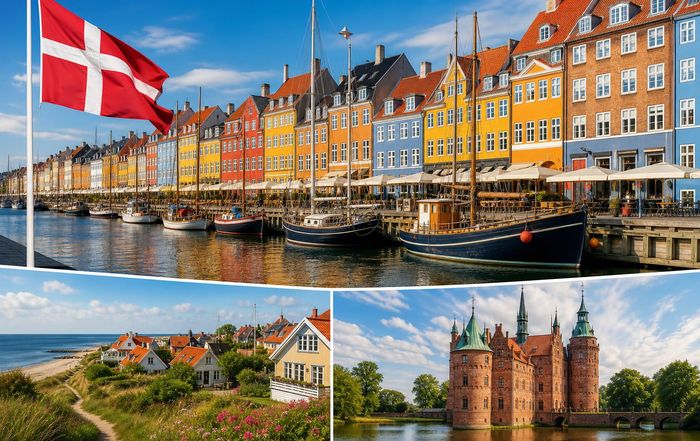
Denmark Travel Guide to Coastal Towns and Historic Cities
Denmark has long been associated with hygge, design, and a quietly confident quality of life, yet for many international travelers its most rewarding treasures are found not only in Copenhagen's fashionable streets but along its wind-swept coasts and in its remarkably preserved historic cities. For readers of WorldWeTravel, Denmark offers a compelling blend of seaside calm, cultural depth, and family-friendly infrastructure, all wrapped in a spirit of environmental responsibility that increasingly defines modern travel. Come as we explore Denmark's coastal towns and historic cities as living, breathing communities rather than static postcard scenes, drawing on up-to-date developments in transport, sustainability, and hospitality to help travelers plan journeys that are both enriching and responsible.
Why Denmark Belongs on the Modern Traveler's Map
Denmark consistently ranks among the world's happiest countries, a status documented by the World Happiness Report and often linked to social trust, safety, and work-life balance. For travelers, these factors translate into cities and towns that are easy to navigate, welcoming to families, and attentive to quality in everything from public spaces to hotel breakfasts. The country's compact size makes it ideal for multi-stop itineraries, with coastal landscapes never far from urban centers and historic quarters.
According to VisitDenmark, the national tourism organization, overnight stays by international visitors have been growing steadily, with particular interest from travelers in Germany, the United Kingdom, the United States, Sweden, and Norway. Improved rail links, expanded cycling infrastructure, and a strong focus on sustainable tourism mean that visitors can increasingly explore Denmark without relying on private cars, a trend that aligns closely with the eco-conscious values of the WorldWeTravel community and with broader European climate goals referenced by the European Environment Agency.
Travelers seeking inspiration for multi-country trips can explore broader European options through the destination overviews at WorldWeTravel destinations, but Denmark stands out as a place where coastal and urban experiences blend seamlessly in a single itinerary.
Copenhagen: Gateway to Coasts and History
No exploration of Denmark's coastal towns and historic cities can ignore Copenhagen, the capital that has become a global reference point for urban livability. The city's historic core around Nyhavn, Christiansborg Palace, and the Round Tower offers a dense concentration of heritage, while the nearby waterfront and harbor baths show how a former industrial port has been transformed into a clean, swimmable urban coastline. Environmental monitoring by the Danish Environmental Protection Agency confirms that water quality improvements over the past decades have made harbor swimming a mainstream local pastime.
Copenhagen's role as a gateway city is reinforced by Copenhagen Airport's extensive network of European and intercontinental routes, documented by Copenhagen Airports A/S, making it an easy starting point for journeys that continue by train or ferry to smaller coastal communities. Travelers can learn more about planning these multi-stop routes at WorldWeTravel's travel planning hub, which emphasizes rail and ferry connections as low-stress, low-carbon alternatives to domestic flights.
The city's historic quarters, from the cobblestone streets of Indre By to the canals of Christianshavn, offer a gentle introduction to Danish architecture and design, blending Renaissance, Baroque, and modern Nordic minimalism. Cultural institutions such as the National Museum of Denmark and the Danish Architecture Center provide context for the country's maritime history and its more recent reputation as a leader in sustainable urban design. These institutions highlight how Denmark's coastal geography shaped its trade, defense, and cultural exchanges with neighboring regions, laying the foundations for the historic cities explored later in this guide.
The Danish Riviera: North Zealand's Elegant Coast
North of Copenhagen, the coastline of North Zealand is often called the "Danish Riviera," a name that reflects its long history as a summer retreat for Copenhagen's residents and its gentle, shallow beaches. Towns such as Helsingør, Hornbæk, and Gilleleje combine maritime charm with easy rail access, which makes them particularly attractive to families and travelers who prefer to avoid renting a car.
Helsingør, known internationally as Elsinore, is anchored by Kronborg Castle, the UNESCO World Heritage Site immortalized as the setting of Shakespeare's "Hamlet." UNESCO's documentation of Kronborg emphasizes its strategic position at the narrowest point of the Øresund Strait, where Denmark historically controlled shipping between the Baltic and the North Sea. Today, visitors can explore the fortress, its casemates, and cultural events while also strolling through Helsingør's preserved old town, which retains merchant houses and cobbled lanes that speak to centuries of maritime trade.
The nearby M/S Maritime Museum of Denmark, designed by BIG - Bjarke Ingels Group, has been widely covered in architectural media such as ArchDaily for its innovative below-ground structure built within a former dry dock. The museum's exhibitions trace Denmark's seafaring heritage and modern shipping industry, giving travelers a deeper understanding of the coastal communities they visit. For those planning family trips, the interactive exhibits and open harborfront spaces make Helsingør a rewarding day excursion, complementing the family-focused resources offered at WorldWeTravel family travel.
Further west along the coast, Hornbæk and Gilleleje offer a more relaxed village atmosphere, with sandy beaches, dunes, and marinas. The Danish Meteorological Institute notes that while Denmark's climate remains temperate, summers have become slightly warmer over recent decades, extending the practical beach season and encouraging both domestic and international visitors to explore these coastal towns. Local authorities and tourism boards have responded with upgraded promenades, cycling paths, and small-scale accommodations that emphasize comfort and environmental responsibility rather than mass tourism.
Aarhus: A Historic City Facing the Sea
On the east coast of the Jutland peninsula, Aarhus has emerged as Denmark's second city and a cultural hub in its own right. Recognized as a former European Capital of Culture, Aarhus has invested heavily in museums, public spaces, and waterfront redevelopment, transforming former industrial docks into residential and cultural districts. The city's official tourism site, supported by VisitAarhus, highlights how new districts like Aarhus Ø integrate canals, harbor baths, and modern architecture with public access to the sea.
Aarhus's historic core around the Latin Quarter and the cathedral preserves medieval street patterns and buildings, while the open-air museum Den Gamle By reconstructs urban life from the 18th, 19th, and 20th centuries. Researchers and curators at Den Gamle By have collaborated with Danish universities, as documented in academic publications, to ensure that the reconstructions are grounded in archival evidence and oral histories, offering visitors a nuanced sense of how Danish towns evolved over time.
The city is also home to ARoS Aarhus Art Museum, whose rooftop "Your Rainbow Panorama" by artist Olafur Eliasson has become a recognizable symbol of contemporary Danish art. ARoS's program, documented on its official website, balances international exhibitions with a strong focus on Nordic artists, underscoring Aarhus's role as both a regional and global cultural player.
For travelers interested in combining coastal walks, urban culture, and regional excursions, Aarhus is a natural base. Ferries connect the city to the island of Zealand, while trains link it to smaller historic towns across Jutland. Those planning multi-city itineraries can cross-reference options with the broader European and global coverage at WorldWeTravel global travel insights, which situates Aarhus within northern Europe's growing network of mid-sized, livable cities.
Odense and Funen: Storybook Landscapes and Maritime Heritage
In the heart of Denmark, the island of Funen (Fyn) occupies a special place in the national imagination as a landscape of orchards, rolling fields, and half-timbered farmhouses. Its principal city, Odense, is internationally known as the birthplace of Hans Christian Andersen. The city has invested significantly in redeveloping its center, including the opening of the Hans Christian Andersen House, a museum complex designed by Kengo Kuma and Associates that has been widely covered by design media such as Dezeen and Designboom for its immersive storytelling and integration with landscaped gardens.
Odense's commitment to pedestrianization and cycling reflects broader Danish trends documented by organizations like the European Cyclists' Federation, which ranks Denmark among Europe's most bicycle-friendly countries. Visitors can move easily between the historic quarter, museums, and riverside parks, creating an experience that is particularly comfortable for families and multigenerational groups. This aligns closely with the well researched planning advice and safety-oriented recommendations emphasized at WorldWeTravel travel tips.
Beyond Odense, Funen's coastal towns such as Svendborg, Faaborg, and Kerteminde offer a gentler pace. Svendborg serves as a gateway to the South Funen Archipelago, where small islands are connected by ferries and bridges, and where the Danish Nature Agency has designated several protected areas to conserve marine and coastal ecosystems. Kerteminde, on the island's northeastern coast, is home to the Fjord & Bælt center, which conducts research on marine life and promotes public understanding of the Baltic Sea environment; its research collaborations with universities in Denmark and abroad can be traced through academic publications and the center's own reports.
These towns showcase how Denmark's maritime heritage, from fishing to shipbuilding, has transitioned into tourism and service economies while retaining a strong sense of local identity. For travelers seeking smaller hotels, guesthouses, and farm stays, the accommodation overviews at WorldWeTravel hotels and stays provide a useful framework for evaluating location, sustainability practices, and accessibility.
The West Coast of Jutland: Wild Shores and Coastal Villages
While Denmark's eastern coasts are generally sheltered and dotted with harbors, the North Sea coastline along western Jutland is more dramatic, with long sandy beaches, dunes, and powerful winds that have made the region a focal point for renewable energy. Reports from Energinet and the Danish Energy Agency document how offshore wind farms along this coast contribute significantly to Denmark's electricity supply, illustrating how the same natural forces that shape the landscape also power the country's green transition.
Towns such as Esbjerg, Hvide Sande, and Thyborøn have evolved from traditional fishing and shipping centers into gateways for coastal tourism and outdoor activities. Esbjerg, one of Denmark's major ports, hosts the striking "Man Meets the Sea" sculpture and serves as a base for exploring nearby Fanø, an island known for wide beaches and historic thatched-roof houses. The Wadden Sea National Park, a UNESCO World Heritage Site shared with Germany and the Netherlands, is accessible from this region and is recognized for its tidal flats and birdlife, as documented on UNESCO's official site and by the Common Wadden Sea Secretariat.
Further north, the Thy National Park area near Klitmøller, sometimes called "Cold Hawaii," has gained international attention for surfing, with coverage in outlets such as National Geographic and confirmation from Danish tourism authorities of its growing profile among outdoor enthusiasts. This development illustrates how Denmark's coastal towns are diversifying their appeal, attracting visitors interested not only in traditional beach holidays but also in surfing, kiteboarding, hiking, and birdwatching, all supported by infrastructure that emphasizes low-impact enjoyment of nature.
For travelers who wish to combine active experiences with reflection and wellness, this region's quiet beaches and simple accommodations align well with the restorative journeys discussed at WorldWeTravel retreats and wellness, which highlight how time in nature can complement urban cultural exploration.
Historic Cities Beyond the Capital: Ribe, Roskilde, and Aalborg
Denmark's historic cities form a constellation that extends far beyond Copenhagen, each offering a distinct perspective on the country's past and present. Ribe, often cited as Denmark's oldest town, is located in southwest Jutland and is known for its cobbled streets, half-timbered houses, and imposing cathedral. Archaeological research summarized by the National Museum of Denmark and academic studies indicates that Ribe was a key trading center during the Viking Age, a heritage explored at the Ribe Viking Center, which combines reconstructed buildings with living history demonstrations grounded in archaeological evidence.
On the island of Zealand, Roskilde occupies a central place in Danish royal and religious history. The Roskilde Cathedral, another UNESCO World Heritage Site, is the burial place of many Danish monarchs and a landmark of early Gothic architecture in northern Europe, as described in UNESCO's official listing. Nearby, the Viking Ship Museum displays original Viking vessels recovered from the fjord and documented extensively in conservation studies and maritime archaeology journals. These ships offer tangible evidence of the seafaring culture that connected Denmark to Norway, Sweden, the British Isles, and beyond.
Further north, Aalborg on the Limfjord exemplifies the transformation of an industrial city into a cultural and educational center. The waterfront has been redeveloped with cultural institutions such as the Utzon Center, dedicated to architect Jørn Utzon, designer of the Sydney Opera House, and the Musikkens Hus concert hall. Aalborg's urban regeneration projects have been studied by planning scholars and cited by the OECD as examples of how mid-sized cities can leverage culture and design to support economic transition, an issue that resonates with the key economic perspectives offered at WorldWeTravel economy and travel.
These historic cities, while smaller than Copenhagen and Aarhus, provide concentrated experiences of Danish history and architecture, often with fewer crowds and a more intimate atmosphere. Their walkable centers, local museums, and proximity to coastlines or fjords make them ideal for travelers seeking depth over breadth in their itineraries.
Sustainable and Eco-Conscious Travel in Denmark
Denmark's reputation as a leader in sustainability is not limited to energy policy; it increasingly shapes how tourism is planned and experienced. The Global Sustainable Tourism Council and Nordic Council of Ministers have highlighted Danish initiatives in areas such as waste reduction, cycling infrastructure, and green building standards for hotels and public facilities. Municipalities like Copenhagen, Aarhus, and Aalborg publish climate action plans that include targets for transport, urban green spaces, and waterfront resilience, all of which influence how visitors move through and experience these cities.
For coastal towns facing sea-level rise and coastal erosion, agencies such as the Danish Coastal Authority and research institutions like DTU (Technical University of Denmark) provide data and guidance on adaptive measures, from dune reinforcement to managed retreat in vulnerable areas. Travelers may notice protective dunes, boardwalks designed to minimize damage to fragile ecosystems, and educational signage explaining local conservation efforts.
Eco-conscious travelers can support these initiatives by choosing accommodations and activities that prioritize environmental responsibility. Many Danish hotels and guesthouses participate in eco-label programs such as the Green Key, whose criteria are publicly available and verified by independent assessors. Restaurants increasingly emphasize locally sourced and seasonal ingredients, reflecting trends documented by organizations like VisitDenmark and culinary media including Eater and The World's 50 Best Restaurants, which have highlighted Denmark's influence on New Nordic cuisine.
These developments align closely with the values articulated at WorldWeTravel eco travel, where sustainable practices are framed not as constraints but as opportunities to engage more meaningfully with destinations. In Denmark, this might mean choosing a coastal guesthouse that participates in dune restoration projects, joining guided nature walks led by local conservation groups, or traveling between cities by train rather than car.
Health, Wellbeing, and the Scandinavian Outdoor Culture
Denmark's coastal towns and historic cities are embedded in a broader Scandinavian culture that values outdoor life and everyday wellbeing. Research summarized by the World Health Organization and regional health authorities indicates that regular physical activity, social cohesion, and access to green and blue spaces are associated with improved mental and physical health, factors that are visibly integrated into Danish urban planning.
Harbor baths in Copenhagen and Aarhus, seaside promenades in Helsingør and Esbjerg, and forested parks near Odense and Roskilde invite both residents and visitors to integrate movement into daily routines. Cycling infrastructure, documented by municipal transport departments and independent organizations like Copenhagenize Design Co., makes it safe and practical for travelers of varying fitness levels to explore cities and coastal routes on two wheels.
For travelers focusing on wellness, Denmark's calm coastal settings, clean air, and emphasis on simple pleasures-such as a seaside walk followed by coffee in a small harbor café-offer a counterpoint to more commercialized wellness destinations. The health-oriented travel perspectives at WorldWeTravel health and travel resonate strongly with this understated approach, where wellbeing emerges from environment and lifestyle rather than from elaborate treatments.
Practical Tips for Exploring Denmark's Coasts and Cities
Planning a journey that weaves together Denmark's coastal towns and historic cities requires attention to logistics, seasonality, and personal interests, but the country's compact size and efficient infrastructure simplify many decisions. The national rail operator DSB provides frequent connections between major cities and regional towns, with schedules and fares clearly presented on its official website, while regional bus networks and ferries fill in gaps along coastlines and islands.
Cycling is a viable option even for visitors, with rental services available in most cities and many towns, and national cycle routes mapped by VisitDenmark and local tourism offices. For those traveling with children, Denmark's emphasis on safety, playgrounds, and family-friendly facilities reduces stress, complementing the guidance available through WorldWeTravel family travel insights.
Seasonality plays a significant role in shaping experiences. Summer brings long days and lively coastal towns, while spring and autumn offer milder weather, fewer crowds, and vivid changes in landscape. Winter, though darker and cooler, can be atmospheric in historic cities, with festive markets, candlelit cafés, and a slower pace that appeals to travelers seeking reflection rather than activity. Weather data from the Danish Meteorological Institute helps illustrate these seasonal patterns, allowing travelers to set realistic expectations and pack appropriately.
As travelers plan, they can cross-reference general advice on packing, transport, and cultural etiquette with the broader amazing guidance at WorldWeTravel travel resources, ensuring that their Danish itinerary fits into a larger pattern of thoughtful, informed exploration.
Denmark as a Model for Future-Focused Travel!
In an era when travelers are increasingly aware of their environmental impact and seek destinations that align with values of inclusivity, safety, and cultural authenticity, Denmark's coastal towns and historic cities stand out as compelling examples of how tourism can evolve. The country's investments in clean energy, sustainable transport, and urban regeneration are documented by institutions like the International Energy Agency, the OECD, and the European Commission, providing independent confirmation that Denmark's reputation for sustainability rests on measurable progress rather than marketing alone.
Denmark offers more than scenic harbors and well-preserved old towns; it presents a living laboratory of how communities can honor their maritime past while embracing a low-carbon, high-quality future. From Helsingør's fortress overlooking the Øresund to Ribe's Viking-age streets, from Aarhus's waterfront museums to the wild dunes of the North Sea coast, travelers encounter places that are deeply rooted yet open to change.
By approaching Denmark with curiosity and respect-choosing trains over cars when possible, supporting local businesses, and engaging with the stories preserved in museums and streetscapes-visitors become part of a broader narrative of responsible travel. In doing so, they not only enrich their own journeys but also contribute, in small but meaningful ways, to the sustainable future that Denmark and many other destinations are actively working to build.