

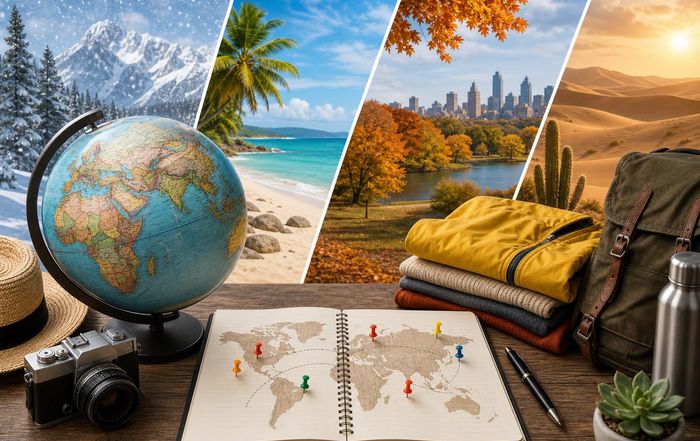
Best Ways to Plan a Global Trip Around Regional Climates
Travelers who plan a journey around the world increasingly recognize that timing is as important as destination. Understanding regional climates, seasonal patterns, and emerging weather extremes enables more comfortable, sustainable, and culturally rich itineraries. For WorldWeTravel readers, who often combine family adventures, business obligations, wellness retreats, and eco-conscious escapes, planning a global trip around climate is not just a logistical exercise but a way to deepen connection with each place visited.
This jet setting page explores how to design an around-the-world journey that follows favorable weather, respects local environments, and aligns with personal goals, drawing on the latest climate and travel research available as of 2026.
Why Climate-Smart Trip Planning Matters
Travelers once relied heavily on simple notions of "high season" and "low season," but climate science and real-time data now show that weather patterns are more complex and, in some regions, more volatile. Organizations such as the World Meteorological Organization and the Intergovernmental Panel on Climate Change (IPCC) document how heatwaves, heavy rainfall, and shifting storm seasons are affecting traditional travel calendars, while tourism bodies in countries like Australia, Italy, and Japan are revising visitor guidance accordingly.
By planning a global route around regional climates, travelers can often avoid the most intense heat, humidity, storms, and crowds, while also reducing pressure on fragile ecosystems during their most vulnerable periods. This approach aligns well with the sustainable travel principles promoted by groups such as the Global Sustainable Tourism Council and the UN World Tourism Organization, which encourage visitors to distribute travel across seasons and regions rather than concentrating demand in a handful of peak months.
For readers of WorldWeTravel's destination insights, the goal is not perfection but informed decision-making: recognizing that no itinerary can entirely avoid weather surprises, yet careful planning can significantly enhance comfort, safety, and the overall experience.
Understanding Global Climate Zones for Travel
A practical starting point is to understand broad climate zones and how they relate to popular travel regions. Resources such as the Köppen-Geiger climate classification (summarized by institutions like Britannica and several national meteorological services) divide the world into categories such as tropical, arid, temperate, continental, and polar. For travelers, these translate into distinct patterns that influence when it is most pleasant to visit.
Temperate regions, including much of Western Europe, the northeastern United States, and parts of China, generally offer mild springs and autumns that are ideal for city exploration, cultural events, and outdoor activities. Mediterranean climates, found in Italy, Spain, France, California, and parts of Australia, feature hot, dry summers and mild, wetter winters, making late spring and early autumn particularly attractive for those who prefer warm but not extreme conditions.
Tropical regions such as Thailand, Malaysia, Brazil, and much of Central Africa experience distinct wet and dry seasons, often with high humidity year-round. Understanding monsoon patterns, cyclone seasons, and local rainfall peaks is crucial here. Reputable sources like the UK Met Office and NOAA in the United States provide accessible climate summaries and historical data for many destinations, helping travelers anticipate typical conditions rather than relying solely on short-term forecasts.
For those planning a complex itinerary through multiple climate zones, tools such as climate comparison charts from ClimateData.org or region-specific information from national tourism boards can help sequence destinations in a way that follows favorable weather rather than fighting against it.
Sequencing an Around-the-World Route by Season
A climate-aware global route often resembles a gentle migration, following spring and autumn across hemispheres while dipping into the tropics during their drier, cooler periods. There is no single "best" route, but certain patterns recur in itineraries curated by experienced tour designers and long-term travelers.
Many travelers begin in late spring in the Northern Hemisphere, taking advantage of mild temperatures in Europe and parts of North America. Cities like Paris, Amsterdam, Berlin, and London are particularly pleasant during shoulder seasons, with longer daylight hours and fewer heatwaves than in mid-summer, a trend supported by data from agencies such as Météo-France and the Royal Netherlands Meteorological Institute. From there, an itinerary might move eastward through Central Europe and into Scandinavia, where summers are short but often comfortably warm, especially in Norway, Sweden, and Finland.
As late summer approaches, some travelers head towards higher altitudes or coastal regions to avoid extreme heat, choosing alpine areas in Switzerland or Austria, or cooler coastal stretches in Canada and the northern United States. By early autumn, the route might continue to Japan or South Korea, where autumn foliage and relatively stable weather create ideal conditions for cultural exploration and outdoor excursions, an experience often highlighted by national tourism organizations and independent travel writers alike.
From East Asia, a climate-smart journey can pivot towards Southeast Asia during its drier months, visiting destinations such as Thailand, Vietnam, and Malaysia when monsoon rains are less intense and humidity, while present, is more manageable. Detailed regional monsoon guidance from the Thai Meteorological Department and similar agencies in neighboring countries helps clarify the best windows for each coastline and island group, which can vary significantly even within a single nation.
Subsequent legs might include Australia and New Zealand during their late spring or early autumn, when temperatures are moderate and wildfire risks, while still monitored, are often lower than during peak summer. National climate agencies such as the Australian Bureau of Meteorology and NIWA in New Zealand provide transparent updates on seasonal outlooks, which are increasingly important given evolving climate conditions.
Finally, many travelers complete a global loop by returning through South America or Southern Africa, timing visits to regions such as Brazil, Argentina, and South Africa to coincide with their more temperate seasons. For those interested in wildlife, timing is particularly crucial; for example, the South African National Parks service and regional conservation organizations publish guidance on optimal periods for safaris based on rainfall, vegetation density, and animal behavior.
Throughout such a journey, WorldWeTravel encourages readers to consult its evolving global travel guidance, which integrates climate considerations with cultural events, economic trends, and practical logistics.
Balancing Climate with Culture, Crowds, and Costs
While climate is a central factor, an around-the-world trip must also balance cultural calendars, visitor numbers, and budget. High season often aligns with the most comfortable weather, particularly in countries like Italy, Spain, Japan, and the United States, which can lead to higher prices, fuller hotels, and more crowded attractions. National tourism boards, such as VisitBritain and Tourism Australia, frequently emphasize shoulder seasons as a way to experience favorable conditions with fewer crowds.
Travelers who consult WorldWeTravel's hotel insights often discover that accommodation prices can vary dramatically between peak and off-peak months, especially in major cities and resort areas. Climate-aware planning can therefore be combined with cost optimization by targeting periods when weather is pleasant but not at its absolute peak desirability, such as late April instead of mid-June in Western Europe, or early November instead of late December in parts of Southeast Asia.
Cultural events also play a role. Festivals such as Carnival in Brazil, Cherry Blossom season in Japan, and major holidays like Christmas and Lunar New Year can transform the atmosphere of a destination but also complicate logistics. Reliable sources including national tourism portals and event organizers provide date ranges and typical crowd levels, allowing travelers to decide whether to embrace or avoid these peak moments. Climate-smart travelers might choose to arrive just before or after major festivals, enjoying the lingering energy without the most intense congestion.
For families, whose needs WorldWeTravel addresses in detail on its family travel pages, school calendars and child-friendly weather add further layers of complexity. Destinations with extreme heat, heavy pollution episodes, or high storm risk may be less suitable for young children or older relatives, especially during their most intense seasons. Health authorities such as the World Health Organization and national public health agencies provide clear guidance on heat safety, air quality, and disease risks, which can be integrated into route planning.
Climate-Informed Accommodation and Local Transport Choices
Choosing where to stay and how to move within each region is equally influenced by climate considerations. In hotter months, accommodations with effective cooling, shade, and access to water can significantly enhance comfort, while in colder or wetter seasons, reliable heating and good insulation become critical. Certification programs such as LEED, BREEAM, and climate-conscious labels promoted by organizations like the Global Sustainable Tourism Council help travelers identify properties that are not only comfortable but also energy-efficient and environmentally responsible.
Travelers using WorldWeTravel's hotel and lodging guidance can look for properties that disclose their sustainability measures, such as efficient HVAC systems, responsible water use, and renewable energy sourcing, which are particularly important in regions facing water scarcity or grid stress during heatwaves. Independent verification from third-party organizations and transparent sustainability reports on hotel websites are more reliable than vague marketing claims.
Local transport choices are also shaped by climate. In cities with extreme summer heat, such as parts of the United States, Spain, and the Middle East, air-conditioned public transport and shaded walking routes can make the difference between an enjoyable day and an exhausting one. Urban mobility resources from city authorities, including heat-aware walking maps and real-time transit information, support better planning. In cooler or milder seasons, cycling and walking become more attractive, aligning with the low-impact mobility principles highlighted by many sustainable travel initiatives.
For travelers exploring rural or mountainous regions, seasonal variations in road conditions, avalanche risk, and daylight hours must be considered. Organizations like Switzerland Tourism and New Zealand's transport agencies publish detailed seasonal driving guidance, while mountain rescue services and national park authorities provide updates on trail access and weather-related closures. Combining this information with WorldWeTravel's practical travel tips can help travelers avoid unnecessary risk.
Health, Well-Being, and Climate-Sensitive Travel
Climate-aware trip planning is closely linked to health and well-being. Heat stress, dehydration, altitude sickness, and vector-borne diseases such as dengue or malaria are all influenced by regional weather patterns and seasonal changes. Public health agencies, including the Centers for Disease Control and Prevention (CDC), the European Centre for Disease Prevention and Control (ECDC), and the World Health Organization, provide destination-specific health advice, vaccination recommendations, and alerts about outbreaks.
For WorldWeTravel readers exploring health-focused travel and wellness, climate plays a direct role in determining the suitability of certain retreats or outdoor activities. Yoga or meditation retreats in tropical regions may be more comfortable during cooler, drier months, while high-altitude trekking in locations such as the Alps, the Andes, or Himalayan regions requires careful attention to both temperature and acclimatization schedules. Reputable mountaineering and trekking organizations publish detailed seasonal guides and safety recommendations, which should be cross-checked with local operators.
Air quality is another increasingly important consideration. Cities in parts of China, India, and some industrialized regions of Europe and North America may experience seasonal spikes in particulate pollution, often exacerbated by temperature inversions or wildfire smoke. Real-time air quality indices from platforms such as IQAir and national environmental agencies provide actionable information, allowing travelers with respiratory conditions or young children to adjust itineraries or daily plans.
Hydration, sun protection, and appropriate clothing remain fundamental but are often underestimated. Expert dermatological organizations and cancer societies in countries like Australia and the United States emphasize the importance of UV protection even on cloudy days, particularly in high-UV regions and at altitude. Integrating these health recommendations into packing lists and daily routines transforms climate-aware travel from a theoretical concept into a practical, protective habit.
Eco-Conscious Timing and the Protection of Fragile Ecosystems
Climate-smart travel is closely intertwined with environmental responsibility. Certain destinations are particularly sensitive to visitor pressure during specific seasons, whether due to wildlife breeding cycles, vegetation recovery periods, or climate-related stress such as coral bleaching events. Conservation organizations, including the World Wide Fund for Nature (WWF) and the International Union for Conservation of Nature (IUCN), provide valuable information on ecosystem vulnerabilities and recommended best practices for visitors.
For example, coral reef destinations in Australia, Thailand, and the Caribbean may experience heightened bleaching risk during marine heatwaves, which are tracked by agencies such as NOAA's Coral Reef Watch. While tourists are not the direct cause of these events, choosing operators committed to reef-safe practices, respecting local guidelines, and avoiding physical contact with coral all contribute to mitigation efforts. Timing visits outside of the most stressful thermal periods can also reduce cumulative pressure on ecosystems.
Wildlife tourism, including safaris in South Africa, whale watching in Canada and Norway, and birding in wetlands across Europe and South America, must be planned with breeding and migration cycles in mind. National park services and reputable tour operators publish calendars indicating when animals are most visible and when human disturbance should be minimized. Sustainable tourism frameworks encourage visitors to prioritize ethical encounters over guaranteed sightings, even if that means traveling slightly outside of the "perfect" climate window.
Readers interested in eco-travel can explore WorldWeTravel's sustainability and eco-tourism section, which highlights destinations and operators that align climate-aware timing with conservation priorities, community benefit, and low-impact practices.
Integrating Work, Business, and Remote Collaboration with Seasonal Routes
As remote and hybrid work have become more common, many professionals now design extended itineraries that combine leisure and work, sometimes referred to as "workcations" or "digital nomad" lifestyles. Climate-aware planning is especially important for these travelers, who require stable conditions not only for personal comfort but also for productivity and reliable connectivity.
Cities such as Lisbon, Barcelona, Berlin, Vancouver, Melbourne, and Singapore have emerged as popular hubs due to their infrastructure, safety, and cultural vibrancy, yet each presents distinct seasonal considerations. For instance, summer heatwaves in parts of Southern Europe may make midday work challenging in poorly cooled accommodations, while monsoon downpours in Southeast Asia can occasionally disrupt local transport or outdoor meetings. National meteorological services and local coworking communities often share seasonal tips that help remote workers adjust schedules and expectations.
Business travelers, whose needs are addressed in WorldWeTravel's business travel guidance, may have less flexibility regarding dates but can still benefit from climate awareness. Scheduling major conferences or client visits outside of peak storm or heat seasons reduces the risk of disruption, while choosing venues with resilient infrastructure and backup systems adds a layer of security. Corporate travel policies increasingly incorporate climate risk assessments, drawing on resources from organizations such as the World Economic Forum and specialized risk consultancies.
For those planning extended work-and-travel itineraries, WorldWeTravel's work and lifestyle section offers strategies to synchronize project timelines, visa requirements, and climate-sensitive routing, ensuring that productivity and well-being remain compatible with exploration.
Practical Tools and Data Sources for Climate-Aware Planning
The growing availability of high-quality climate and weather data has transformed how travelers plan. Long-range climate normals from national meteorological agencies, such as the UK Met Office, Environment and Climate Change Canada, and the Japan Meteorological Agency, offer baseline expectations for temperature and precipitation. Complementing these are seasonal outlooks from bodies like the European Centre for Medium-Range Weather Forecasts (ECMWF) and regional climate centers, which, while not precise forecasts, provide probabilistic guidance on whether a season is likely to be hotter, cooler, wetter, or drier than average.
Travelers can combine this information with tourism-oriented resources from official national and regional tourism boards, which often translate climate data into practical advice for specific activities such as skiing, beach holidays, hiking, or cultural festivals. For example, Switzerland Tourism provides nuanced seasonal guidance for different cantons and altitude ranges, while Tourism New Zealand outlines the best times for trekking, wine touring, and wildlife watching.
At the same time, it is important to distinguish between reliable, science-based sources and unverified anecdotal claims. Cross-checking information between at least two reputable organizations, especially when considering destinations affected by extreme weather, helps reduce the risk of basing decisions on outdated or atypical experiences. WorldWeTravel integrates such cross-checking into its own technology and travel tools coverage, helping readers navigate the expanding ecosystem of apps and platforms.
Designing a Personal Climate-Smart Itinerary with WorldWeTravel
Ultimately, the best way to plan a global trip around regional climates is to begin with personal priorities and then use climate as a guiding framework rather than a rigid constraint. Some travelers prioritize cultural immersion, others focus on outdoor adventure, family bonding, wellness retreats, or business networking; each of these goals interacts differently with seasonal patterns.
By mapping desired destinations across a calendar and then consulting credible climate and tourism data, travelers can identify clusters of locations that align well with their preferred conditions. They might discover, for example, that a family-friendly European cultural loop is most enjoyable in late spring, followed by a restful retreat in a milder coastal region, before continuing to an eco-conscious tropical destination during its cooler, drier season. Alternatively, a professional balancing work and exploration might choose a sequence of cities with temperate climates during key project phases, reserving more challenging environments for shorter, focused adventures.
Throughout this process, WorldWeTravel serves as a companion and curator, connecting readers to in-depth travel overviews, regional economic and global context, and practical tips that bridge the gap between climate theory and lived experience. As climate patterns evolve and data becomes more granular, the ability to plan thoughtfully around weather and seasons becomes not only a mark of expertise but also an expression of respect for the destinations and communities that welcome travelers.
By embracing climate-smart planning, travelers can craft journeys that are more comfortable, resilient, and environmentally responsible, turning an around-the-world trip into a harmonious progression through the planet's diverse and ever-changing climates.